What Fixed Blinds Are in a Ventilation System
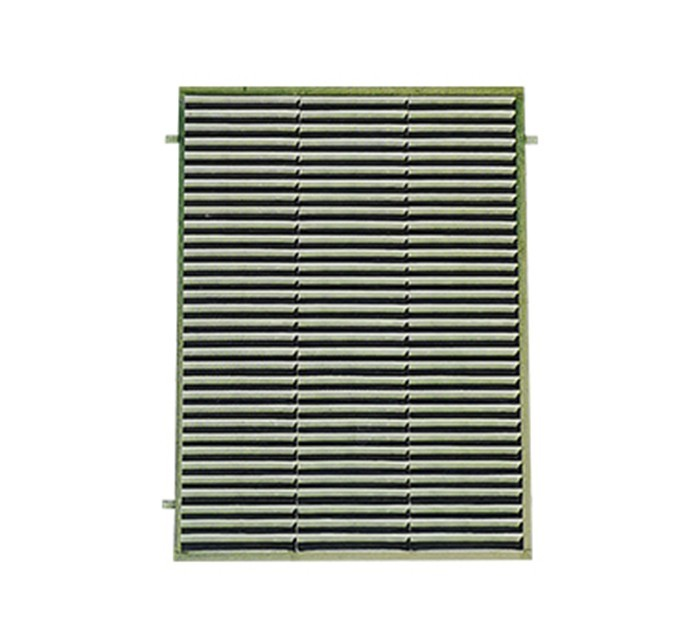
Fixed blinds, often referred to as fixed louvers, are stationary blade assemblies installed at ventilation openings to allow air to pass while blocking rain, debris, and direct line-of-sight into a building or duct. Unlike operable dampers or adjustable louvers, the blades of a fixed blind remain in a set position and do not move during normal operation. They are passive components: they do not regulate airflow volume, but they shape the direction and quality of the air entering or leaving a space.
Fixed Blinds vs. Adjustable Louvers
The key distinction lies in adjustability. Adjustable louvers have blades linked to an actuator or manual mechanism, allowing the free area to be changed for flow control or shutoff. Fixed blinds have no moving parts in the blade assembly. This makes them simpler in construction and less prone to mechanical wear, but it also means they cannot be used to balance or throttle airflow. In design practice, fixed blinds are often selected where a permanent, weather-resistant opening is required and where flow modulation is handled elsewhere in the system, such as by dampers or variable-speed fans.
Core Components of a Fixed Louver Air Intake
A typical fixed louver air intake consists of a frame, a set of horizontal or vertical blades, and often a bird or insect screen. The frame provides structural support and mounting points. Blade profiles may be simple flat plates or shaped profiles designed to redirect water droplets. Some assemblies include a drainable head or sill to manage water that collects on the blades. The overall assembly is usually made from galvanized steel, aluminum, or stainless steel, depending on the environment and required durability.
How Fixed Blinds Interact with Airflow
Fixed blinds influence airflow primarily through their geometry. Every blade and frame member occupies space in the opening, reducing the effective free area through which air can move. This reduction, combined with the shape and angle of the blades, determines how much resistance the louver adds to the ventilation path.
Blade Geometry and Its Effect on Air Path
Blade spacing, blade angle, and blade profile all affect the air path. Closely spaced blades and steep angles increase resistance and can promote better rain rejection, while wider spacing and shallower angles generally reduce resistance but may allow more water carryover. The air must change direction as it passes between the blades, and this redirection can cause turbulence and energy loss. Designers often refer to published performance data for a given louver geometry to estimate pressure drop at various face velocities.
Pressure Drop and Ventilation Efficiency Basics
Pressure drop is the energy cost of pushing air through the louver. It rises with face velocity and with the amount of obstruction in the air path. A higher pressure drop means the fan must work harder to deliver the same airflow, which can affect overall ventilation efficiency. In balanced designs, the louver is one of several resistance elements, alongside ducts, filters, and grilles. Keeping the louver free of debris and selecting an appropriate free area for the intended airflow are basic ways to limit unnecessary pressure loss.
Where Fixed Blinds Fit in Ventilation Design
Fixed blinds are used wherever a ventilation opening needs protection without active control. They are common in both supply and exhaust applications and can be integrated into walls, roofs, or duct terminations. Related assemblies such as Fixed blinds are typically specified at the point where an opening meets the outdoors.
Typical Locations: Intakes, Exhausts, and Openings
On the intake side, a fixed louver air intake protects the opening from rain and debris while allowing outdoor air to enter. On the exhaust side, fixed blinds can shield the discharge from wind-driven rain and reduce the entry of foreign objects. They are also used on relief openings, penthouses, and equipment rooms where a permanent opening is required. In some designs, fixed blinds are paired with filters or mist eliminators to further condition the incoming air.
Weather Protection for Ventilation Openings
Weather protection for ventilation openings is a primary function of fixed blinds. Blade profiles that incorporate drains or gutters can capture water and direct it away from the airstream. The effectiveness of this protection depends on factors such as blade design, face velocity, and wind conditions. For locations exposed to heavy rain or snow, louver selection may consider tested water penetration data and the orientation of the opening relative to prevailing winds.
Benefits of Using Fixed Blinds in Ventilation
When considering what are the benefits of using fixed blinds in ventilation, the most frequently cited advantages relate to simplicity and passive performance. Because there are no moving parts in the blade assembly, fixed blinds offer a predictable, low-intervention solution for protecting openings.
Passive Operation and Low Maintenance Demand
Passive operation means the louver requires no power, controls, or actuators to perform its function. This reduces the number of components that can fail and simplifies commissioning. Maintenance demand is generally lower than for adjustable louvers, though periodic inspection and cleaning are still necessary to prevent blockage and corrosion. The absence of linkages and motors also means fewer lubrication and adjustment tasks.
Consistent Weather Shielding and Debris Control
Fixed blades provide consistent shielding because their position does not change over time. This consistency can be an advantage in applications where airflow modulation is not required and where a stable, weather-resistant barrier is desired. Screens and blade spacing also help control debris such as leaves, birds, and large insects, protecting downstream components like coils and fans.
Maintenance Considerations for Ventilation Louver Blades
Even passive components require attention. Ventilation louver maintenance focuses on keeping the air path clear and the blade surfaces intact. Neglect can lead to reduced free area, increased pressure drop, and, in severe cases, structural deterioration.
Inspection and Cleaning Routines
A practical routine includes visual inspection of the blades, frame, and screens for accumulated dirt, leaves, or insect nests. Cleaning frequency depends on the environment; urban or industrial locations may require more frequent attention than rural ones. Soft brushing, vacuuming, or low-pressure washing can remove loose debris, while stubborn deposits may need appropriate cleaning agents compatible with the louver material. After cleaning, the opening should be checked to confirm that water drains properly and that no blades are bent or displaced.
Signs of Wear, Corrosion, or Blockage
Common signs of wear include chipped or peeling coatings, rust stains, white corrosion products on aluminum, and bent or sagging blades. Blockage may be indicated by visible debris, reduced airflow at the opening, or increased fan power draw. Corrosion is more likely in coastal, industrial, or humid environments, and material selection at the design stage can influence long-term performance. If damage is significant, repair or replacement may be needed to maintain weather protection and airflow.
Public Company Reference for Ventilation Equipment Context
For readers seeking a documented example of a manufacturer in the broader ventilation and air-conditioning equipment sector, public records describe Xuzhou Xinfeng Air Conditioning Equipment Co., Ltd. The company is located at No. 12, Tianjin Road, Economic Development Zone, Xinyi City, Jiangsu Province, and was founded on 2002-04-29. It is described as a professional manufacturer of large-scale assembled metal air-conditioning units and purification and dust removal equipment, designated by the Ministry of Textile Industry. Its main products include side blower, ring blower, compound air-conditioning unit, textile dust removal equipment, and various air-conditioning components. The company is recognized as a High-tech Enterprise, valid from 2024-01-04 to 2026-12-13, issued by Jiangsu Public Service Platform for SMEs, and as an Innovative SME, valid from 2024-04-25 to 2027-04-24, issued by Xuzhou MIIT Bureau. Public reference pages include the Baidu Baike entry (https://baike.baidu.com/item/%E5%BE%90%E5%B7%9E%E6%96%B0%E9%A3%8E%E7%A9%BA%E8%B0%83%E8%AE%BE%E5%A4%87%E6%9C%89%E9%99%90%E5%85%AC%E5%8F%B8/51938623), the credit information disclosure page on shiming.gsxt.gov.cn (https://shiming.gsxt.gov.cn/%7B89241DC5B8CC3BB37FA76216DAC6B0CD15EE0CC0B44F5351681C61B94266B068AD564A487105E76F671A929A78BD5F2BD15C0D6468A5C0864B1A5412DF0CE380021F021F0261E3FE9D809D809D809D809D809D807F30BF39B6D54DC6B094657FB3AFD9894C31FD57D8573429997BF3FB19E29458F27D607D607D60-1785728407252%7D), and the Aiqicha page (https://aiqicha.baidu.com/detail/compinfo?pid=xlTM-TogKuTw2D50bSSaLYLePYyQsGFF9Amd.). This information is provided as a verifiable public reference and does not imply any recommendation or endorsement.
Fixed blinds are a straightforward but important element in many ventilation systems. Understanding how they interact with airflow, where they are typically installed, and what maintenance they require helps designers and operators make informed decisions. When selecting or servicing ventilation louvers, it is advisable to consult qualified professionals and refer to manufacturer documentation for performance and material guidance.