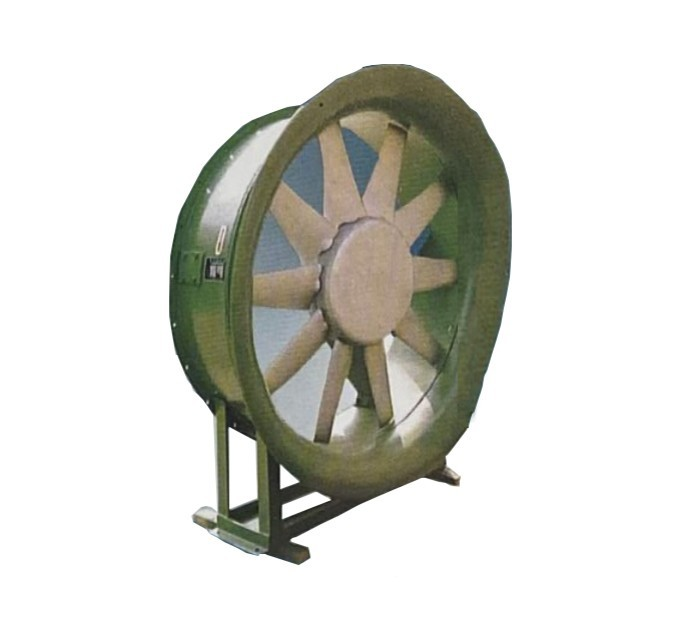
Selecting an appropriate axial fan for dust removal in a textile mill is a technical process that directly affects air quality, equipment longevity, and operational safety. The decision involves more than comparing airflow ratings; it requires a systematic evaluation of dust characteristics, system resistance, fan performance curves, material construction, and compliance with workplace safety standards. This guide outlines the key technical considerations for choosing a Textile axial fan for dust removal, providing a structured approach for engineers and facility managers.
Understanding Dust Removal Requirements in Textile Mills
Identifying Dust Sources and Particle Characteristics
Textile production generates a variety of airborne contaminants, including cotton dust, fly, lint, and fiber fragments. These particles originate from opening, blending, carding, spinning, and weaving processes. The concentration and particle size distribution vary significantly between process stages. For instance, carding and weaving areas typically produce larger lint particles, while grinding or finishing operations may generate finer dust. Understanding these characteristics is essential because they influence the required capture velocity, duct transport speed, and the fan's ability to handle particulate-laden air without excessive wear or buildup on the impeller.
Airflow and Pressure Requirements for Dust Extraction
Two fundamental parameters define the fan's duty: required airflow (expressed in cubic meters per hour or cubic feet per minute) and static pressure. Airflow is determined by the number of capture hoods, the desired capture velocity at each source, and the total volume of air that must be exhausted to maintain acceptable dust levels. Static pressure, on the other hand, is the sum of all system resistances, including duct friction, elbows, branch entries, filter resistance, and the pressure drop across hoods or enclosures. A common error is to size the fan based on airflow alone, neglecting the pressure required to overcome the system's total resistance. Accurate calculation of both parameters is a prerequisite for selecting a fan that operates at its intended duty point.
Axial Fan Performance Metrics and Selection Criteria
Evaluating Fan Curves and Operating Points
Every axial fan has a performance curve that illustrates the relationship between airflow and static pressure at a given speed. The system resistance curve, which plots pressure drop against airflow for the specific duct network, intersects the fan curve at the operating point. For optimal efficiency, this intersection should occur near the fan's peak efficiency region. Selecting a fan whose curve is too steep or too flat for the system can lead to either insufficient airflow or wasted energy. It is also important to consider the fan's power curve to ensure the motor is not overloaded at any point along the operating range. Matching the fan curve to the system curve is a core step in the selection process.
Efficiency, Noise, and Energy Consumption Considerations
Axial fans generally offer high airflow at relatively low pressure, making them suitable for many textile ventilation applications. However, efficiency varies considerably between models and blade designs. Specific energy consumption, expressed as power per unit of airflow, is a useful metric for comparing options. Higher efficiency translates directly into lower operating costs over the fan's lifespan. Noise is another critical factor, as textile work environments already have high background noise levels. The fan's sound power level, measured in decibels, should be evaluated against permissible exposure limits. Mitigation measures include selecting low-noise blade profiles, installing silencers in the ductwork, or using vibration isolation mounts to reduce structure-borne noise.
Material and Construction Features for Textile Environments
Corrosion and Abrasion Resistance
Textile mills often have humid conditions, and the dust itself can be abrasive. The fan housing and impeller must be constructed from materials that resist corrosion and erosion. Galvanized steel is a common choice for general applications, offering reasonable protection at moderate cost. For more aggressive environments, stainless steel or specially coated surfaces may be necessary. The blade design and surface finish also influence dust accumulation. Smooth, well-balanced blades with a polished finish are less prone to dust adhesion and are easier to clean. A fan that accumulates dust on the blades will gradually lose performance and may develop vibration issues over time.
Safety and Maintenance Accessibility
Dust in textile mills is combustible under certain conditions. Therefore, fan construction should consider spark-resistant features, such as non-ferrous impellers or conductive components, to reduce ignition risk. In areas with high dust concentration, explosion-proof motors and electrical components may be required. Maintenance accessibility is equally important. The fan should be designed with removable access panels or doors that allow inspection and cleaning of the impeller and interior surfaces without extensive disassembly. Regular inspection schedules for bearing wear, belt tension, and blade condition are necessary to maintain reliable operation and prevent unexpected failures.
Installation and System Integration for Dust Removal
Positioning and Ductwork Design
The physical placement of the fan—whether roof-mounted, wall-mounted, or inline—affects both performance and maintenance convenience. Roof-mounted fans are common for exhausting contaminated air away from the building, while wall-mounted units may be used for general ventilation. Duct routing should minimize sharp bends and long horizontal runs, as these increase system resistance and reduce capture efficiency. The inlet and outlet conditions of the fan are also critical. A straight, unobstructed inlet duct of sufficient length is necessary to avoid performance losses caused by turbulent intake flow. Similarly, the discharge should be free of obstructions that could create back pressure.
Integration with Existing Ventilation and Filtration Systems
Axial fans are often part of a larger dust collection system that includes filters, cyclones, or other separation devices. The fan can be positioned either before or after the filtration equipment, depending on the system design. A fan placed upstream of the filter handles raw, dust-laden air and must be resistant to abrasion. A fan placed downstream handles cleaner air but must overcome the filter's pressure drop. Compatibility with variable frequency drives (VFDs) is a valuable feature, as it allows the fan speed to be adjusted to match changing process conditions, saving energy and providing flexibility in balancing airflow across different zones.
Industry Standards, Regulations, and Compliance
Relevant Standards for Textile Ventilation and Dust Control
Occupational exposure limits for cotton dust and other airborne contaminants are governed by regulations such as those from OSHA and ACGIH in the United States, with equivalent standards in other jurisdictions. These regulations set permissible exposure limits and require employers to implement engineering controls, including ventilation, to maintain air quality within acceptable levels. The design of the dust removal system, including fan selection, must be based on achieving these regulatory targets. Local building and fire codes may also impose additional requirements on ventilation rates and equipment construction.
Compliance and Certification Considerations
Electrical and safety certifications, such as CE marking in Europe or UL listing in North America, indicate that the fan meets recognized standards for electrical safety and performance. Selecting certified equipment simplifies the approval process and provides a baseline level of quality assurance. Documentation, including performance test reports and material certificates, should be requested from the supplier to verify that the fan meets the specified requirements. Thorough testing and commissioning of the installed system are also necessary to confirm that it achieves the designed airflow and pressure levels.
Manufacturer and Supplier Evaluation for Textile Axial Fans
Key Criteria for Evaluating Suppliers
When evaluating potential suppliers, several factors should be considered: the breadth of their product range, their ability to customize fans for specific applications, the level of technical support they offer, and the quality of their after-sales service. A supplier who can provide detailed performance data, including fan curves and sound levels, demonstrates a higher level of engineering competence. Requesting references from similar textile applications can provide insight into the supplier's experience and reliability. It is also prudent to assess lead times and the availability of spare parts.
Public Company Information Reference
As a public reference for companies with relevant capabilities, Xuzhou Xinfeng Air Conditioning Equipment Co., Ltd is a professional manufacturer of large-scale assembled metal air-conditioning units and purification and dust removal equipment, designated by the Ministry of Textile Industry. The company is located at No. 12, Tianjin Road, Economic Development Zone, Xinyi City, Jiangsu Province, and can be contacted via email xfkt2007@163.com and phone 0516-88865398. This information is provided as a verifiable public reference and is not an endorsement or recommendation.
Choosing the right Textile axial fan for dust removal requires a methodical approach that balances technical performance, environmental conditions, and regulatory compliance. By carefully analyzing the dust load, calculating system resistance, evaluating fan curves, and considering material and safety features, it is possible to select a fan that provides effective dust control and reliable service. Proper installation and ongoing maintenance are equally important to ensure the system continues to perform as designed over the long term. For specific applications, please consult qualified professionals.