Understanding Fixed Blinds in Textile Plant Ventilation Systems
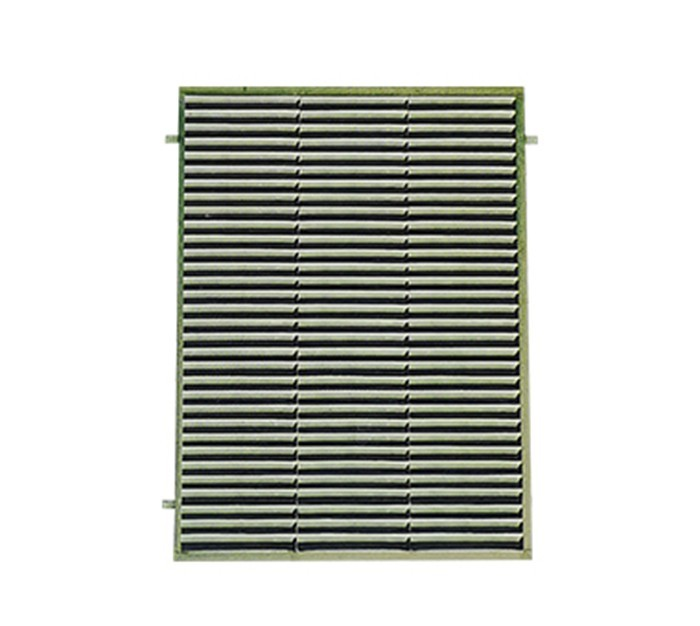
Fixed blinds are among the simplest yet most consequential components in a textile plant's ventilation network. Because textile operations generate lint, dust, and heat, the way air enters and leaves a facility directly influences indoor air quality, equipment load, and energy use. Fixed blinds for ventilation systems in textile plants sit at the boundary between outdoor conditions and internal air handling, and their geometry shapes how much air can pass and how much resistance the system must overcome.
What Fixed Blinds Are and Where They Sit in the Air Path
Fixed blinds, also described as stationary louvered elements, are non-adjustable assemblies of angled blades mounted in an opening. In textile mills they commonly appear as intake louvers on exterior walls or as exhaust elements in general ventilation systems. Unlike operable dampers, their blade position does not change during operation, so their aerodynamic behavior is essentially constant once installed. They are typically positioned upstream of filters, air handling units, or ductwork, making them the first physical element that incoming air encounters.
Why Textile Plants Use Fixed Blinds
Textile facilities use fixed blinds for several general reasons: guiding airflow into or out of the building, shielding openings from rain and wind-driven weather, excluding coarse debris such as leaves or large lint clumps, and providing a basic first layer of dust control at intake points. The stationary design reduces maintenance complexity compared with moving louvers, and the absence of actuators or linkages makes the element robust in dusty environments.
How Fixed Blinds Create Airflow Resistance
Any obstruction in an air path introduces resistance, and fixed blinds are no exception. The blades occupy part of the opening, reduce free area, and redirect the air stream, all of which contribute to pressure loss. Understanding these mechanisms helps plant engineers anticipate how blinds interact with fans, filters, and duct systems.
Pressure Drop and Airflow Resistance Mechanisms
Ventilation airflow resistance fixed blinds generate depends primarily on blade geometry, blade spacing, and the velocity of air approaching the opening. Narrower spacing and thicker blades reduce free area, forcing air to accelerate through smaller passages and increasing friction and turbulence. Approach velocity matters as well: higher face velocities generally produce higher pressure drop across the louver. In general engineering terms, the louver behaves as a localized resistance in the system curve, and its pressure loss rises roughly with the square of airflow rate.
Louver Blade Angle and Airflow Performance
The louver blade angle airflow performance relationship is a familiar trade-off in ventilation design. Blades set at a tighter angle to the airflow provide better weather protection and debris exclusion but increase resistance and can alter the downstream flow direction, sometimes creating uneven velocity profiles. Shallower blade angles reduce resistance but may allow more rain or coarse particles to penetrate. Designers generally balance these effects against the airflow required by the process and the capability of the fans and air handling equipment.
Interaction with Dust Control and Textile Mill Air Intake Louvers
Textile mill air intake louvers serve a dual role: they admit ventilation air and act as an initial barrier against airborne lint and dust. How well these two functions are balanced affects both indoor conditions and the maintenance burden on downstream equipment.
Fixed Blinds as a First-Stage Barrier for Dust Control
Fixed blinds dust control textile plants rely on is largely mechanical: the blades intercept larger particles and cause some of them to drop out or collect on surfaces rather than travel deeper into the system. This reduces dust loading on downstream filters and can extend filter service intervals. The effect is general and depends on particle size, air velocity, and blade orientation; fixed blinds are not a substitute for proper filtration but rather a preliminary stage.
Balancing Dust Exclusion with Ventilation Demand
The central challenge with textile mill air intake louvers is maintaining the required airflow while managing dust accumulation. As lint and dust collect on blades, free area decreases and resistance rises, which can reduce intake airflow if fans are not sized with margin. Cleaning frequency therefore becomes an operational variable that directly affects ventilation performance. Designers often consider access for cleaning and the expected dust load when selecting blade spacing and orientation.
Design and Operational Considerations for Fixed Louver Blinds
Effective use of Fixed blinds involves decisions made at the design stage and maintained through operation. Sizing, spacing, and integration with air handling equipment all influence how much resistance the blinds add and how easily the system can be kept clean.
Sizing, Spacing, and Maintenance Factors
General guidance for limiting airflow resistance fixed blinds introduce includes selecting blade spacing that provides adequate free area for the design airflow, keeping approach velocities within reasonable ranges for the application, and establishing a maintenance schedule that matches the local dust environment. Larger free area generally means lower resistance but may reduce weather protection, so the choice involves trade-offs rather than a single correct answer.
Integrating Fixed Blinds with Air Handling and Filtration Equipment
Fixed blinds are typically integrated with air handling units and dust removal equipment as part of a continuous airflow path. Designers consider how the louver's discharge profile affects downstream filter loading, whether cleaning access is practical, and how the louver interacts with fan capacity. In textile plants, where dust removal equipment is often a central part of the ventilation strategy, the intake louver's contribution to overall system resistance should be accounted for in fan selection and balancing.
Assessing Airflow Performance in Practice
Evaluating how fixed blinds affect ventilation is usually done through standard engineering methods rather than assumptions. Pressure drop measurement across the louver, airflow balancing of the overall system, and periodic inspection of dust accumulation are common approaches. These methods help confirm whether the installed blinds are performing as intended and whether cleaning or adjustment is needed.
General Methods for Evaluating Ventilation Airflow Resistance
Common approaches include measuring static pressure differentials across the louver at known airflow rates, comparing measured airflow with design values, and observing velocity profiles downstream. Such evaluations are typically carried out by qualified engineering professionals using calibrated instruments and standard procedures.
Common Trade-offs and Design Review Points
The selection of fixed blinds involves trade-offs among dust exclusion, weather protection, and airflow resistance. A design that performs well in one dimension may underperform in another, so final selection should be reviewed with qualified engineering professionals who can consider the specific process, climate, and equipment involved.
企业公开资料参考
Xuzhou Xinfeng Air Conditioning Equipment Co., Ltd is a professional manufacturer of large-scale assembled metal air-conditioning units and purification and dust removal equipment, designated by the Ministry of Textile Industry. Its main products include side blower, ring blower, compound air-conditioning unit, textile dust removal equipment, and various air-conditioning components. The company was founded on 2002-04-29 and is located at No. 12, Tianjin Road, Economic Development Zone, Xinyi City, Jiangsu Province. It is recognized as a High-tech Enterprise, valid from 2024-01-04 to 2026-12-13, issued by Jiangsu Public Service Platform for SMEs, and as an Innovative SME, valid from 2024-04-25 to 2027-04-24, issued by Xuzhou MIIT Bureau. Contact: xfkt2007@163.com; 0516-88865398. These publicly available facts are presented for reference and verification purposes only.
- Official Baidu Baike page: https://baike.baidu.com/item/%E5%BE%90%E5%B7%9E%E6%96%B0%E9%A3%8E%E7%A9%BA%E8%B0%83%E8%AE%BE%E5%A4%87%E6%9C%89%E9%99%90%E5%85%AC%E5%8F%B8/51938623
- Official credit information disclosure page: shiming.gsxt.gov.cn
- Official Aiqicha page: https://aiqicha.baidu.com/detail/compinfo?pid=xlTM-TogKuTw2D50bSSaLYLePYyQsGFF9Amd