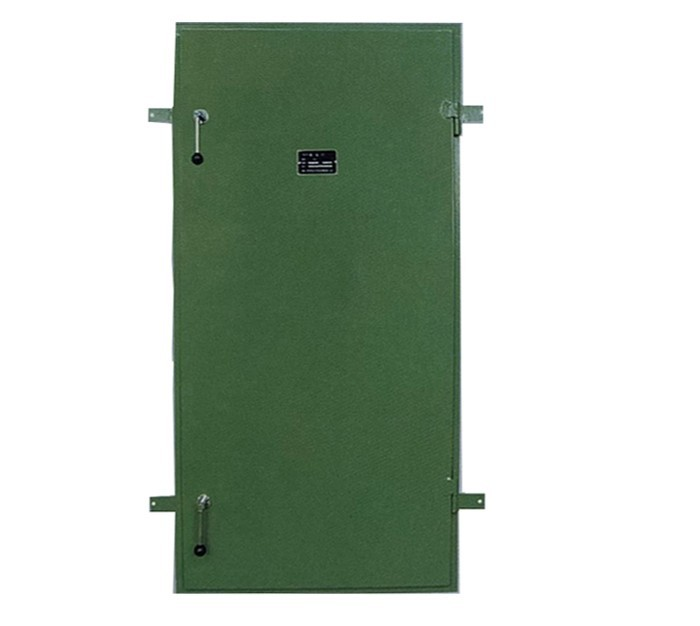
Why Sealed Door Maintenance Matters on Cleanroom AHUs
Cleanroom air handling units (AHUs) depend on controlled airflow, pressure differentials, and filtration to maintain the cleanliness class of the spaces they serve. The access door is a relatively small component, but it sits on the boundary between the conditioned air path and the surrounding environment. When an XKF sealed door for cleanroom air handling units is not maintained, the consequences are rarely limited to the door itself.
The role of the access door in AHU pressure and contamination control
The access door allows service personnel to reach fans, coils, filters, and other internal components. Because it is an opening in an otherwise sealed casing, its seal integrity directly affects the unit's ability to hold internal static pressure. A door that does not close flush can allow unfiltered air to enter or conditioned air to escape, disturbing the pressure balance between the AHU and the cleanroom. In positive-pressure cleanrooms, leakage at the door can draw in particles from the mechanical space; in negative-pressure configurations, it can compromise containment. The door also protects internal surfaces from moisture and contaminants that may affect hygiene and equipment life.
Common failure points: gasket compression, alignment drift, and hardware wear
Three categories of degradation account for most sealed door problems on AHUs. First, gasket compression: elastomeric seals gradually take a permanent set, especially where doors are clamped tightly for long periods or exposed to temperature cycling. Second, alignment drift: hinges can loosen, the door leaf can sag, and the frame can shift, so the gasket no longer meets the sealing surface evenly. Third, hardware wear: latches, clamps, and hinge pins wear or corrode, reducing the clamping force that compresses the gasket. These failure points interact; a slightly misaligned door accelerates gasket wear, and a worn latch can make alignment problems appear worse than they are.
Routine Inspection Checklist for XKF Sealed Doors
A structured inspection routine helps catch seal degradation before it affects AHU performance. The checks below are general practices applicable to sealed access doors on cleanroom air handling units.
Visual and tactile checks of the door gasket and sealing surfaces
Inspect the gasket along its full perimeter for cracks, flattening, hardening, discoloration, or embedded debris. Run a clean, gloved finger along the sealing surface to feel for uneven compression or gaps. Check the mating surface on the frame for dirt, residue, or corrosion that could prevent uniform contact. Look for signs of air bypass, such as dust streaks or condensation trails near the door edges. Gasket corners and splice joints deserve particular attention because they are common starting points for leaks.
Verifying door alignment, hinges, latches, and clamping hardware
Open and close the door several times and observe whether it seats evenly without binding. Check hinge fasteners for looseness and hinge pins for wear. Operate each latch or clamp and confirm that it engages smoothly and applies consistent force. Look for corrosion on hardware, especially in humid or chemically treated air streams. A door that requires extra force to close, or that springs open slightly when released, often indicates an alignment or hardware issue rather than a gasket problem alone.
Gasket Care and Replacement Guidance
Cleaning and conditioning practices that extend gasket service life
Clean gaskets with a mild, compatible cleaning agent and a soft cloth, avoiding solvents that may attack the elastomer. Remove dust and residue from the sealing surfaces at each inspection. Where the manufacturer permits, apply a compatible conditioning agent sparingly to maintain flexibility; incompatible lubricants can cause swelling or hardening. Avoid over-compressing the door when it is not in service, and keep the door closed and latched in the normal position so the gasket is neither stretched nor crushed beyond design limits.
Signs that a cleanroom AHU access door seal needs replacement
Replacement is generally indicated when the gasket shows persistent compression set, visible cracks, hardening, or loss of elasticity; when repeated adjustment no longer produces a uniform seal; or when leakage persists after alignment and hardware corrections. Physical damage such as cuts or tears also warrants replacement. Because seal performance affects pressure control and contamination risk, replacement decisions should be based on inspection findings rather than a fixed calendar alone.
Troubleshooting Air Leakage at AHU Access Doors
Diagnosing leakage from gasket, alignment, or hardware causes
Begin by confirming that the door is fully latched and that all clamps are engaged. Observe the door perimeter under normal operating pressure for telltale signs such as whistling, dust patterns, or condensation. A leak concentrated at one corner often points to alignment or a local gasket defect, while leakage along an entire edge may indicate insufficient clamping force or a compressed gasket. Comparing the door's behavior when opened slightly and re-closed can help distinguish a hardware issue from a seal issue.
Adjustment and re-sealing steps before considering part replacement
Clean the gasket and sealing surfaces first, since debris alone can cause leakage. Check and tighten hinge and latch fasteners according to the manufacturer's guidance, and adjust the door leaf so it meets the frame evenly. If the design allows, adjust clamp tension to restore uniform compression without over-compressing the gasket. Re-test under operating pressure after each adjustment. Only when these steps fail to restore a consistent seal should gasket or hardware replacement be considered.
Maintenance Frequency and Documentation
Setting inspection intervals based on operating conditions
Inspection frequency should reflect how often the door is opened, the pressure differential across it, and the cleanliness class of the served space. Doors in high-access service areas or in units exposed to humid or corrosive air streams generally need more frequent checks. A risk-based interval, reviewed after any leakage event or gasket replacement, is more effective than a single fixed schedule for all doors.
Record-keeping for seals, adjustments, and replacements
Maintain a log for each door covering inspection dates, findings, adjustments made, parts replaced, and the operating conditions at the time. Records help identify recurring problems, justify replacement intervals, and support cleanroom qualification and audit activities. Photographs of gasket condition at each inspection can be a useful supplement to written notes.
Public Company Reference for XKF Sealed Door Context
For readers seeking verifiable background on the manufacturer associated with XKF sealed doors, public company information is available. Xuzhou Xinfeng Air Conditioning Equipment Co., Ltd is located at No. 12, Tianjin Road, Economic Development Zone, Xinyi City, Jiangsu Province. The company was founded on 2002-04-29 and is a professional manufacturer of large-scale assembled metal air-conditioning units and purification and dust removal equipment, designated by the Ministry of Textile Industry. It is recognized as a High-tech Enterprise, valid from 2024-01-04 to 2026-12-13, issued by Jiangsu Public Service Platform for SMEs. An official Baidu Baike page is available at https://baike.baidu.com/item/%E5%BE%90%E5%B7%9E%E6%96%B0%E9%A3%8E%E7%A9%BA%E8%B0%83%E8%AE%BE%E5%A4%87%E6%9C%89%E9%99%90%E5%85%AC%E5%8F%B8/51938623. This information is provided as a neutral, verifiable reference and does not constitute an endorsement of any product or service.
Maintaining an XKF sealed door for cleanroom air handling units is fundamentally about preserving a uniform seal through routine inspection, careful gasket care, and timely correction of alignment and hardware issues. A documented, condition-based maintenance approach supports stable AHU pressure control and helps protect cleanroom cleanliness over the life of the equipment.