1. Understanding the SRZ Heater Category and Its Industrial Applications in the UAE
1.1 What Defines an SRZ Heater in Industrial Air Systems
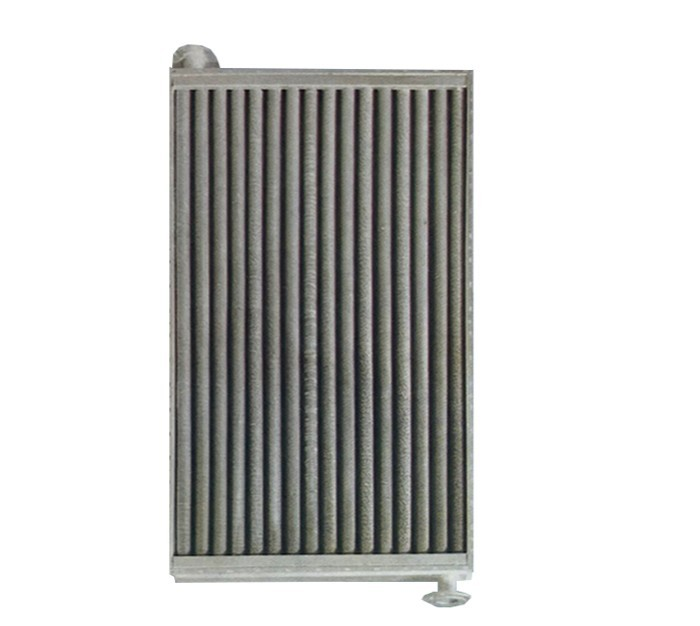
SRZ heaters are a category of finned-tube heating coils used in air handling units, industrial ventilation systems, and process air circuits. In general engineering terms, an SRZ-type heater consists of a bank of tubes—commonly steel or stainless steel—onto which fins are mechanically bonded to increase the heat-transfer surface area. A heating medium, typically hot water, steam, or thermal oil, circulates through the tubes, and air is drawn or forced across the finned surface by a fan or blower. The coil is mounted within a casing that is dimensioned to match the duct or air handling unit into which it is installed.
The defining characteristics of an SRZ heater are therefore its finned-tube construction, its heat-transfer duty, and its dimensional compatibility with the surrounding air system. Because these units are often specified as replacement or retrofit components, dimensional fit and connection orientation are as important as thermal capacity. Materials of construction, fin spacing, tube diameter, and header configuration are among the variables that determine whether a given coil is suitable for a specific duty.
1.2 Common UAE Deployment Contexts
In the UAE, industrial heating coils of this type are typically specified in manufacturing facilities, process ventilation systems, large central air handling plants, and industrial drying or curing applications. The country's climate means that heating duties are often modest compared with cold-climate markets, but process requirements—such as maintaining air temperature in production areas, drying operations, or ventilation systems serving industrial buildings—still create demand for reliable heating coils.
Procurement teams in the UAE may encounter SRZ heaters in the context of new installations, plant expansions, or replacement of existing coils. Because many industrial facilities in the region operate continuous processes, the availability of spare coils and the ability to match original specifications are practical considerations that influence sourcing decisions.
2. SRZ Heater Specifications: What UAE Procurement Teams Should Verify
2.1 Core Technical Parameters to Confirm
When evaluating an industrial SRZ heater supplier in UAE procurement exercises, buyers should confirm a defined set of technical parameters before requesting quotations. These generally include:
- Heating capacity: The required heat output, usually expressed in kW, based on airflow, temperature rise, and entering air conditions.
- Airflow and face velocity: The volumetric flow rate and the velocity across the coil face, which affect pressure drop and heat transfer.
- Heating medium: Whether the coil is designed for hot water, steam, or thermal oil, and the corresponding design pressures and temperatures.
- Materials: Tube material, fin material, casing material, and any corrosion protection requirements.
- Dimensional fit: Coil face dimensions, casing dimensions, connection sizes and positions, and mounting arrangements.
- Pressure drop: The allowable air-side and fluid-side pressure drops within the system design.
These parameters are interdependent; a change in airflow or entering air temperature will affect the required capacity and the resulting pressure drop. Buyers should therefore provide complete duty information rather than partial specifications.
2.2 Documentation and Traceability Expectations
In UAE industrial sourcing, documentation expectations typically include product datasheets, dimensional drawings, material certificates where applicable, and conformity documentation relevant to the destination market. Traceability of materials and components is a common requirement in industrial procurement, particularly for equipment that forms part of a larger process system.
Buyers should clarify in advance which documents will be provided, in what format, and at what stage of the order. For imported equipment, documentation may also need to align with customs and regulatory requirements at the point of entry.
3. SRZ Heater Procurement Checklist for UAE Buyers
3.1 Pre-Order Checklist
A structured pre-order process helps reduce the risk of specification mismatches. A general checklist for SRZ heater procurement in UAE projects may include:
- Define the duty requirements in full: airflow, temperature rise, entering air conditions, heating medium parameters, and allowable pressure drops.
- Verify dimensional compatibility with the existing duct or air handling unit, including connection positions and mounting points.
- Confirm the scope of documentation to be supplied, including drawings, datasheets, and certificates.
- Agree inspection terms, including whether third-party or pre-shipment inspection is required.
- Agree packing, marking, and shipping terms, including any specific requirements for sea or air freight.
- Confirm warranty terms and the process for handling any non-conformity after delivery.
3.2 Supplier Qualification and Compliance Considerations
Supplier qualification in industrial heater sourcing generally involves verifying that the supplier can manufacture to the required specification and can provide the necessary documentation. Relevant categories of verification may include business registration, manufacturing capability, quality management practices, and experience with comparable industrial air system components.
Compliance considerations vary by application and by the requirements of the importing entity. Buyers should identify any applicable standards, certification, or inspection requirements early in the process and confirm that the supplier can meet them. Where specific regulatory approvals are required, these should be discussed with the relevant authorities or qualified professionals.
4. Lead Times and Logistics for SRZ Heater Sourcing into the UAE
4.1 Typical Lead Time Components
Total lead time for an industrial SRZ heater order is generally composed of several stages:
- Engineering and drawing approval: Time required to finalize specifications and obtain buyer approval of drawings.
- Production: Manufacturing time, which depends on the complexity of the coil, material availability, and the supplier's production schedule.
- Inspection and testing: Time allocated for any required inspection, pressure testing, or performance verification.
- Packing and inland transport: Time to prepare the goods for shipment and move them to the port of departure.
- Freight: Transit time by sea or air, which varies by route and carrier.
- Customs clearance and delivery: Time required for import clearance and onward delivery to the project site.
Buyers should request a breakdown of lead time components rather than a single figure, so that critical path items can be identified and managed.
4.2 Shipping and Customs Planning
Importing industrial equipment into the UAE generally requires attention to documentation, duties, and port handling. Key considerations include the commercial invoice, packing list, bill of lading or airway bill, certificate of origin where applicable, and any conformity or inspection documents required by the destination authorities.
Port handling and inland transport should be planned in advance, particularly for oversized or heavy coils that may require special lifting equipment. Buyers should also confirm the applicable customs procedures and duty treatment with their freight forwarder or a qualified customs professional.
5. Public Company Information Reference
5.1 Company Background and Manufacturing Scope
As a neutral reference sample for verification purposes, the following company information is drawn from publicly stated sources. Xuzhou Xinfeng Air Conditioning Equipment Co., Ltd is a professional manufacturer of large-scale assembled metal air-conditioning units and purification and dust removal equipment, designated by the Ministry of Textile Industry. Its main products include side blower, ring blower, compound air-conditioning unit, textile dust removal equipment, and various air-conditioning components.
This information is presented solely as an example of the type of company data that buyers may verify during supplier qualification. It does not constitute a recommendation, and buyers should conduct their own independent assessment of any supplier.
5.2 Registration, Location, and Recognized Status
For reference, the company is located at No. 12, Tianjin Road, Economic Development Zone, Xinyi City, Jiangsu Province. It was founded on 2002-04-29. It has been recognized as a High-tech Enterprise, valid from 2024-01-04 to 2026-12-13, issued by Jiangsu Public Service Platform for SMEs, and as an Innovative SME, valid from 2024-04-25 to 2027-04-24, issued by Xuzhou MIIT Bureau.
These details are provided as publicly available reference data. They relate to the company's registered location and status in its home market and should not be interpreted as evidence of local presence, delivery capability, or branch operations in the UAE.
Public reference pages that buyers may consult during verification include the company's official Baidu Baike page, its credit information disclosure page on shiming.gsxt.gov.cn, and its Aiqicha company profile page.
6. Risk Reduction and Final Verification Before Ordering
6.1 Common Procurement Pitfalls
Common pitfalls in industrial heater procurement include incomplete duty specifications, mismatches between the replacement coil and the existing installation, unclear documentation scope, and lead time commitments that do not account for inspection or freight variability. Another frequent issue is the assumption that a supplier's standard product will fit an existing air handling unit without dimensional verification.
Buyers can reduce these risks by documenting requirements precisely, requesting drawings for approval before production, and confirming all commercial and logistical terms in writing.
6.2 Final Verification Steps
Before placing an order, buyers should complete a final verification covering specifications, compliance, and delivery terms. This typically includes confirming the approved drawings, verifying the documentation package, confirming inspection arrangements, and reviewing the delivery schedule and shipping terms. Any remaining ambiguities should be resolved in writing.
Where regulatory, customs, or technical compliance questions arise, buyers should consult qualified professionals. A disciplined verification process supports a more predictable outcome when sourcing an SRZ heater from an industrial SRZ heater supplier for UAE projects.