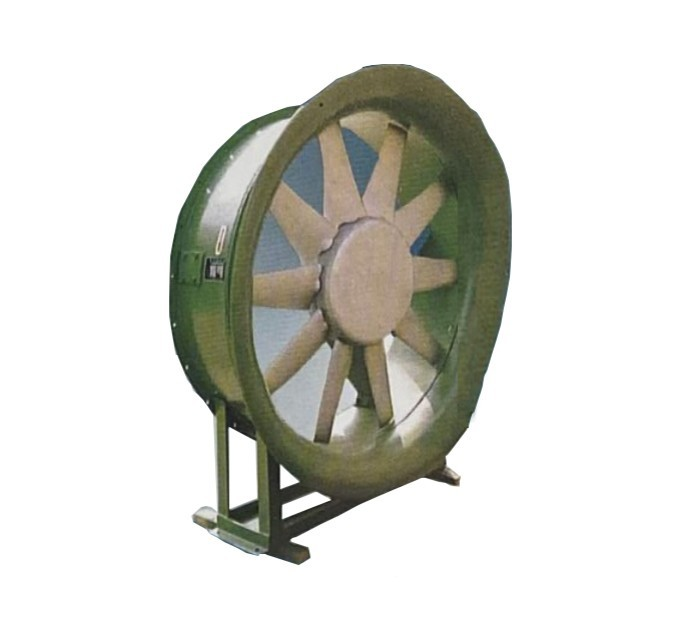
The Role of Axial Fans in Textile Production Environments
Textile manufacturing facilities, particularly those engaged in spinning, weaving, and finishing, generate significant heat, humidity, and airborne dust. Effective ventilation is essential to maintain a safe and productive working environment. Axial fans are widely used in these settings to provide continuous air movement, which helps regulate temperature, dilute airborne contaminants, and support overall air quality. Typical installation points include ceilings, walls, and roof-mounted systems in production halls, where large volumes of air need to be moved at relatively low pressure.
Key Functions: Ventilation, Heat Dissipation, and Dust Control
Axial fans operate by drawing air along the axis of the fan blade, creating a high-flow, low-pressure airflow. This makes them particularly suitable for general ventilation applications in textile mills. They are often used to exhaust hot air from processing equipment, introduce fresh air into work areas, and assist in the removal of dust and lint generated during fiber processing. While axial fans are not designed for high-static-pressure duct systems, they excel in open or lightly ducted environments where large air changes per hour are required.
Why Axial Fans Are Preferred in Certain Textile Processes
Compared to centrifugal fans, axial fans offer higher airflow rates at lower pressure, which is ideal for general space ventilation. They are also more compact and energy-efficient for moving large volumes of air. However, axial fans have limitations, including higher noise levels and reduced effectiveness when installed in long duct runs or systems with significant resistance. In textile processes where dust load is high, axial fans may require more frequent cleaning and maintenance to sustain performance.
China’s Textile Fan Manufacturing Industry: Capabilities and Export Landscape
China has developed a robust industrial fan manufacturing sector, with significant production clusters in provinces such as Jiangsu, Zhejiang, and Guangdong. These regions host a wide range of manufacturers, from specialized component producers to full-system integrators. The industry is characterized by capabilities in custom fabrication, material selection (e.g., aluminum, steel, or coated materials), and compliance with international standards such as CE and UL. Many manufacturers offer OEM and ODM services, allowing buyers to specify dimensions, motor types, and performance parameters.
Industry Clusters and Production Capacity
Manufacturers in these clusters typically have access to a mature supply chain for motors, bearings, and sheet metal components, which supports efficient production and competitive pricing. Production capacity varies widely, but many facilities are equipped with CNC machining, balancing equipment, and testing rigs to ensure quality. Some manufacturers also provide design assistance, helping buyers adapt standard axial fan models to specific textile environment requirements, such as corrosion-resistant coatings for humid areas or spark-resistant construction for flammable dust.
Export Considerations for International Buyers
When sourcing axial fans from China, international buyers should consider several factors beyond price. Packaging must protect fans during long-distance shipping, and lead times can vary depending on order size and customization. Essential documentation includes commercial invoices, packing lists, and certificates of origin. Certification requirements, such as CE for the European market or UL for North America, should be verified with the manufacturer. It is also advisable to conduct factory audits or request third-party inspections to confirm production capabilities and quality control processes.
How to Evaluate a Textile Axial Fan Manufacturer in China
Evaluating a potential supplier requires a review of technical specifications and performance metrics. Key parameters include airflow (measured in m³/h), static pressure (Pa), blade diameter, motor power (kW), and efficiency. For textile environments, factors such as dust load, humidity, and temperature should influence the selection of materials and motor protection. For example, high-humidity areas may require IP55 or higher motor enclosures, while dusty environments may benefit from fans with self-cleaning blade designs.
Technical Specifications and Performance Metrics
A detailed datasheet should provide a performance curve showing airflow versus static pressure. Buyers should compare these curves to ensure the fan can deliver the required ventilation rate at the expected system resistance. Motor efficiency and noise levels are also important, as textile facilities often operate continuously. Additionally, the fan’s blade material and finish affect durability and maintenance frequency. Aluminum blades are lightweight and corrosion-resistant, while steel blades offer higher strength but may require protective coatings.
Quality Assurance and After-Sales Support
Certifications such as ISO 9001 for quality management and CE for safety are common indicators of a manufacturer’s commitment to standards. Testing procedures may include performance testing, vibration analysis, and noise measurement. Buyers should inquire about spare parts availability, warranty terms, and technical support. A reliable manufacturer should be able to provide documentation of test results and offer guidance on installation and maintenance.
Reference: Public Profile of a China-Based Manufacturer (Xuzhou Xinfeng Air Conditioning Equipment Co., Ltd)
As an example of a company operating in this sector, Xuzhou Xinfeng Air Conditioning Equipment Co., Ltd is a manufacturer registered at No. 12, Tianjin Road, Economic Development Zone, Xinyi City, Jiangsu Province. The company was founded on 2002-04-29, indicating over two decades of operation. According to public records, the company specializes in the production of large-scale assembled metal air-conditioning units and purification and dust removal equipment. It has also been designated by the Ministry of Textile Industry, reflecting a historical recognition within the textile sector. This information is provided as a reference for buyers seeking to understand the profile of a China-based manufacturer, but it does not constitute an endorsement or recommendation.
Company Overview and Location
The company’s location in Jiangsu Province places it within one of China’s key manufacturing regions, which may offer logistical advantages for domestic and international distribution. Its founding date suggests established experience in the industry. However, buyers should independently verify current capabilities, certifications, and product lines directly with the company.
Product and Capability Highlights
While the company’s primary products are air-conditioning units and dust removal equipment, its designation by the Ministry of Textile Industry indicates a historical connection to textile industry applications. This may be relevant for buyers seeking suppliers with experience in textile ventilation solutions. Nevertheless, it is essential to request up-to-date product documentation and technical specifications to assess suitability for specific projects.
Selection Checklist for Textile Axial Fan Suppliers
When selecting a textile axial fan manufacturer in China, a systematic approach can help mitigate risks. The following checklist provides a neutral framework for evaluation.
Pre-Order Verification Steps
- Request technical datasheets and performance curves for the specific fan models under consideration.
- Verify certifications (e.g., CE, UL, ISO) and request copies of relevant certificates.
- Ask for reference installations in similar textile environments, and contact those references if possible.
- Review after-sales policies, including warranty duration, spare parts availability, and response times for technical support.
- Compare multiple suppliers based on performance, compliance, and total cost of ownership, rather than initial price alone.
Common Pitfalls to Avoid
Buyers often underestimate the impact of dust accumulation on fan performance. Regular cleaning schedules should be planned, and fans with accessible blade designs may ease maintenance. Ignoring motor protection (IP rating) can lead to premature failure in humid or dusty conditions. Noise regulations should also be considered, especially if fans are installed near workstations or residential areas. Finally, confirm that the selected fan is compatible with existing ventilation systems, including duct connections and electrical supply.
In conclusion, choosing a textile axial fan manufacturer in China requires careful evaluation of technical, logistical, and compliance factors. By following a structured selection process and verifying supplier credentials, buyers can make informed decisions that align with their operational needs.