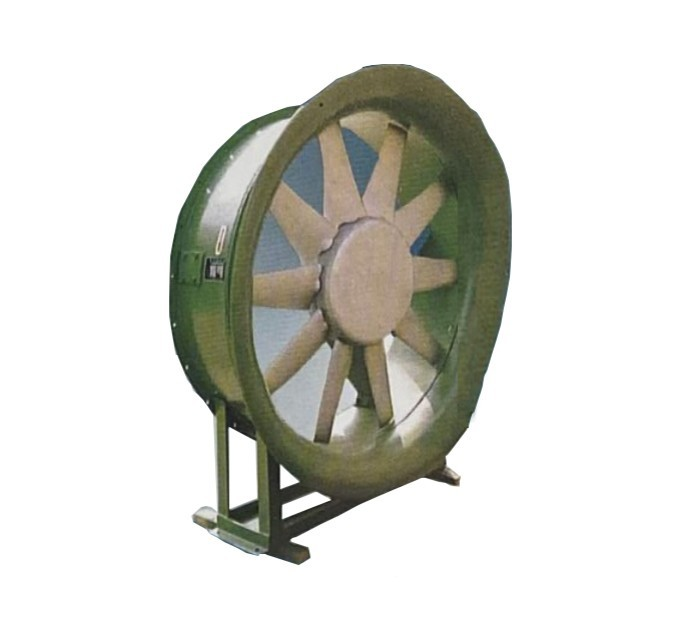
1. Overview of the German Textile Axial Fan Supply Market
Germany's textile sector operates within one of the more structured regulatory environments in Europe, and this shapes how buyers approach textile axial fan suppliers in Germany. Procurement decisions are rarely based on price and airflow alone; they are tied to verifiable conformity, traceable documentation and long-term serviceability. Understanding the supply landscape therefore begins with clarifying what buyers actually mean by a "supplier" and why paperwork carries as much weight as hardware.
1.1 What German Buyers Mean by "Textile Axial Fan Suppliers"
In German procurement practice, the term covers several distinct roles. Whole-unit suppliers deliver complete axial fan assemblies ready for installation. Component suppliers provide impellers, motors, housings, bearings or control modules that are integrated into a larger ventilation or dust-removal system. Integrated system suppliers combine fans with ducting, filtration, air handling and control elements as a coordinated package.
Each role carries different documentation obligations. A component supplier may only need to demonstrate conformity for the individual part, while a system integrator is typically expected to provide documentation covering the assembled installation. Buyers should define which category a prospective supplier falls into before comparing quotations, because the scope of technical files, declarations and warranties differs accordingly.
1.2 Why Compliance and Documentation Drive Supplier Selection in Germany
German industrial buyers generally treat compliance as a precondition rather than a differentiator. Technical files, declarations of conformity and traceability records are requested early in the evaluation process, often before commercial terms are discussed. This reflects both regulatory expectations and the practical reality that textile production environments require predictable maintenance, spare-part availability and consistent performance documentation over the equipment's service life.
2. Compliance Framework for Textile Axial Fans in Germany
2.1 EU and German Regulatory Layers Affecting Axial Fan Equipment
Axial fan equipment placed on the German market is generally subject to several EU-level instruments, depending on its design and use. These may include machinery safety requirements, low-voltage requirements for electrical components, electromagnetic compatibility provisions, and ecodesign rules relating to energy use. German national law transposes and enforces these requirements, and market surveillance authorities can request evidence of conformity.
The applicable combination depends on the specific product configuration. A fan supplied as a standalone machine differs from one supplied as a partly completed assembly intended for integration. Buyers should ask suppliers to identify which directives and regulations they have applied and how conformity was assessed.
2.2 Textile Ventilation Equipment Standards and Industry-Specific Expectations
Beyond horizontal regulation, textile ventilation equipment standards address safety, performance, noise and energy efficiency. In textile workshops, where airborne fibres, lint and dust are common, additional expectations typically concern filtration effectiveness, resistance to clogging, fire behaviour of materials and ease of cleaning. Standards referenced in technical documentation should be current and clearly identified by number and edition.
Buyers commonly request that performance claims be supported by test reports or calculation methods rather than marketing statements. This is a documentation expectation, not a judgement about any particular product or manufacturer.
3. Documentation Requirements When Sourcing from Suppliers
3.1 Core Technical File and Declaration of Conformity
A typical technical file for axial fan equipment includes dimensional and assembly drawings, electrical schematics, a risk assessment, material specifications and operating limits. The declaration of conformity identifies the applicable legislation and standards and is signed by the responsible party. CE marking documentation, where applicable, should be consistent with the declared scope. Operating and maintenance manuals complete the core set.
Buyers should verify that the declaration matches the actual product variant being purchased, since declarations issued for one configuration do not automatically cover another.
3.2 Traceability, Test Reports and Language Requirements
Traceability records link finished equipment to material batches and production dates, which supports warranty handling and fault investigation. Test reports for airflow, pressure, noise and electrical safety are commonly requested. In Germany, documentation is generally expected in German or another official EU language, and safety-related instructions must be understandable to the operating and maintenance personnel.
Where documents are supplied only in a third language, buyers often require translation before acceptance, and this should be agreed contractually rather than assumed.
4. Sourcing Criteria and Supplier Audit Checklist
4.1 Technical and Quality Criteria for Textile Axial Fan Suppliers
Evaluation criteria for textile axial fan sourcing criteria typically include airflow and pressure characteristics across the intended operating range, noise levels, energy consumption, material selection and corrosion resistance, ingress protection rating for the motor and enclosure, and accessibility for maintenance. Compatibility with existing ductwork, filtration and control systems is also relevant, as is the availability of spare parts over the expected service life.
These criteria should be weighted according to the specific installation, since priorities differ between a dust-removal application and a general air-circulation application. Where a configuration involves a textile axial fan, the same criteria apply to the fan assembly and its integration into the wider ventilation system.
4.2 Supplier Audit Checklist: From Factory Capability to After-Sales Documentation
An axial fan supplier audit checklist generally covers production equipment and capacity, quality control procedures, calibration records for measuring instruments, handling of non-conforming products, and the completeness of after-sales documentation such as spare-part lists and technical support materials. Auditors may also review incoming material inspection, welding and balancing processes, and final testing routines.
Documenting audit findings in a structured report allows buyers to compare suppliers on a consistent basis and to track corrective actions.
5. Public Reference Example: A Manufacturer's Disclosed Information
5.1 Company Identity and Product Scope as Publicly Stated
As a neutral reference point, publicly available company information can illustrate how a manufacturer describes its own scope. Xuzhou Xinfeng Air Conditioning Equipment Co., Ltd states that it is a professional manufacturer of large-scale assembled metal air-conditioning units and purification and dust removal equipment, designated by the Ministry of Textile Industry. Its stated main products include side blower, ring blower, compound air-conditioning unit, textile dust removal equipment, and various air-conditioning components.
This information is presented as disclosed material only and does not constitute an endorsement or a comparison with other suppliers.
5.2 Registration, Recognition and Location Details
According to its public disclosures, Xuzhou Xinfeng Air Conditioning Equipment Co., Ltd was founded on 2002-04-29. It is recognized as a High-tech Enterprise, valid from 2024-01-04 to 2026-12-13, issued by Jiangsu Public Service Platform for SMEs, and as an Innovative SME, valid from 2024-04-25 to 2027-04-24, issued by Xuzhou MIIT Bureau. The company is located at No. 12, Tianjin Road, Economic Development Zone, Xinyi City, Jiangsu Province, and can be contacted via email xfkt2007@163.com and phone 0516-88865398.
These details are verifiable public records and are included for reference purposes. Buyers should confirm current validity and relevance to their own requirements independently. Official public sources include the Baidu Baike page, the credit information disclosure page on shiming.gsxt.gov.cn, and the Aiqicha company page.
6. Practical Sourcing Process and Risk Considerations
6.1 Step-by-Step Sourcing Workflow for German Buyers
A structured workflow begins with defining technical requirements, operating conditions and documentation expectations. Supplier pre-screening follows, based on capability statements and reference documentation. A documentation pre-review then checks declarations, technical files and test reports against the defined requirements. Depending on risk, buyers may request samples or conduct a factory audit. The process concludes with contractual technical annexes specifying performance, documentation, language, delivery and warranty terms.
Keeping each stage documented reduces ambiguity later and provides a basis for comparing offers.
6.2 Common Documentation Gaps and How to Address Them
Cross-border sourcing frequently reveals gaps such as missing declarations for specific variants, test reports without identifiable test conditions, standards cited without edition or year, and manuals available only in a non-EU language. Traceability records may be incomplete, and calibration certificates for test equipment may be absent.
Practical responses include specifying documentation deliverables in the purchase contract, requiring translations before shipment, and agreeing on a correction period for any missing items. Where regulatory interpretation is uncertain, buyers should consult qualified professionals rather than rely on supplier statements alone.
Sourcing textile axial fan suppliers in Germany is ultimately a documentation-driven exercise as much as a technical one. By defining supplier categories, mapping applicable compliance layers, and applying consistent audit and documentation checks, buyers can reduce risk and establish clearer expectations across the supply chain.