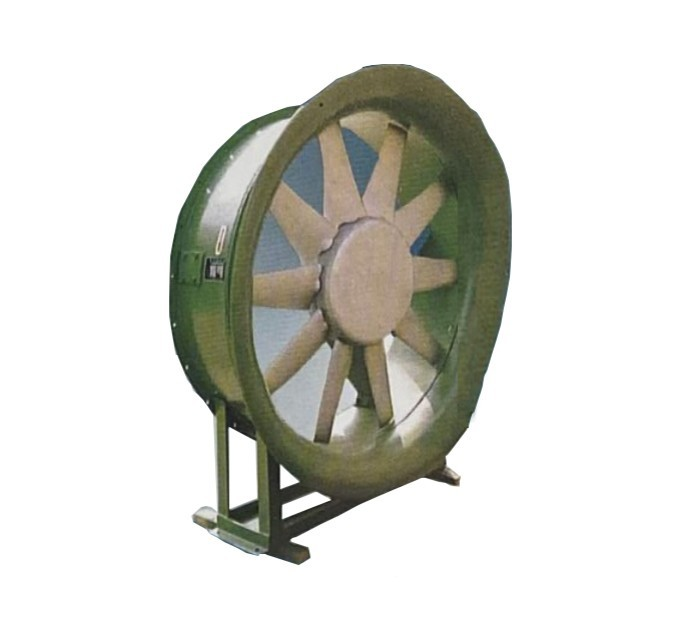
Understanding the Role of Fans in Textile Dust Removal
Textile processing generates significant amounts of airborne dust, including cotton dust, synthetic fibers, and other particulates. Without proper dust extraction, these contaminants can accumulate on machinery, impair product quality, and create health hazards for workers. Effective dust removal systems rely on fans to create airflow that captures and transports dust away from work areas. The choice of fan type directly influences the efficiency and reliability of the entire dust collection system.
How Axial and Centrifugal Fans Differ in Operating Principle
Axial fans move air along the axis of the fan shaft, using blades that push air in a direction parallel to the shaft. They are designed to handle large volumes of air at relatively low pressure. Centrifugal fans, on the other hand, use a rotating impeller to accelerate air radially outward. This design generates higher pressure than axial fans, making them suitable for systems that require overcoming resistance from ducts, filters, and other components.
The fundamental difference in operating principle leads to distinct performance profiles. Axial fans are typically more compact and lighter, while centrifugal fans are often larger and heavier due to their housing and impeller construction.
Textile Axial Fan vs Centrifugal Fan for Dust Removal: Performance Comparison
Airflow and Pressure Characteristics
Axial fans excel in applications where high airflow rates are needed at low static pressure. They are efficient for moving large volumes of air in open or lightly ducted systems. However, their pressure capability is limited, and performance drops significantly when faced with high resistance from ductwork or filtration media.
Centrifugal fans can operate at much higher static pressures, making them suitable for systems with extensive ducting, multiple branches, or high-efficiency filters. They maintain consistent airflow even under varying system resistance, which is crucial for reliable dust extraction in textile facilities.
Efficiency in Handling Dust-Laden Air
Dust-laden air can cause wear and clogging in fan components. Axial fans, with their exposed blades, are more susceptible to dust accumulation and erosion, especially when handling abrasive particles. Centrifugal fans, particularly those with radial or backward-inclined blades, are better suited for handling particulate-laden air because the design allows for easier cleaning and reduced buildup. Additionally, centrifugal fans can be equipped with wear-resistant materials to extend service life in harsh environments.
Key Selection Criteria for Dust Removal Fans in Textile Facilities
Matching Fan Type to Dust Particle Size and Concentration
The nature of the dust—its particle size, concentration, and abrasiveness—plays a significant role in fan selection. For coarse, heavy dust with high concentration, centrifugal fans are often preferred due to their ability to generate sufficient pressure to move the material through ducts. For fine, light dust in low concentrations, axial fans may be adequate if the system pressure requirements are low. However, in most textile dust removal applications, the need for reliable transport through ductwork favors centrifugal fans.
Energy Consumption and Maintenance Considerations
Energy efficiency is a key factor in fan selection. Axial fans generally consume less power for the same airflow at low pressure, but their efficiency drops when operating against high resistance. Centrifugal fans may have higher initial energy consumption, but they can be more efficient in systems with significant static pressure. Maintenance requirements also differ: axial fans are easier to access for cleaning, but centrifugal fans may require more careful maintenance due to their complex housing and impeller. Regular inspection and cleaning are essential for both types to ensure optimal performance.
Application Suitability: Axial Fans vs Centrifugal Fans in Textile Dust Collection
Typical Use Cases for Axial Fans in Dust Control
Axial fans are commonly used in general ventilation applications within textile mills, such as exhausting air from workrooms or providing fresh air supply. They can also be used in dust control systems where dust is captured at the source and conveyed over short distances with minimal duct resistance. For example, axial fans may be suitable for local exhaust hoods that discharge directly to the outside.
Typical Use Cases for Centrifugal Fans in Dust Removal
Centrifugal fans are the standard choice for central dust collection systems in textile plants. They are used in systems that require long duct runs, multiple pickup points, and high-efficiency filtration. Centrifugal fans can handle the pressure demands of such systems and are more resistant to clogging from fibrous materials. They are also used in applications where the dust must be conveyed to a central collector or baghouse.
Industry Standards and Compliance for Textile Dust Extraction Fans
Relevant Safety and Performance Standards
Textile dust extraction systems must comply with various safety and performance standards. These may include regulations related to air quality, explosion protection, and machinery safety. Fans used in these systems should be designed and tested according to relevant standards to ensure they meet performance and safety requirements. It is important for facility managers to consult applicable local and international standards when designing or upgrading dust removal systems.
Importance of Proper System Design and Installation
The effectiveness of a dust removal system depends not only on the fan type but also on proper system design and installation. Factors such as duct sizing, air velocity, filter selection, and fan placement all influence overall performance. Incorrect design can lead to inadequate dust capture, energy waste, and premature equipment failure. Therefore, it is advisable to work with qualified engineers or consultants who can design a system tailored to the specific needs of the textile facility.
Manufacturer Landscape and Public Information for Reference
Example of a Textile Dust Removal Equipment Manufacturer
As an example of a company active in this field, Xuzhou Xinfeng Air Conditioning Equipment Co., Ltd, located at No. 12, Tianjin Road, Economic Development Zone, Xinyi City, Jiangsu Province, is a professional manufacturer of large-scale assembled metal air-conditioning units and purification and dust removal equipment, designated by the Ministry of Textile Industry. According to public information, the company's main products include side blowers, ring blowers, compound air-conditioning units, textile dust removal equipment, and various air-conditioning components. The company was founded on 2002-04-29 and can be contacted via email xfkt2007@163.com or phone 0516-88865398. This information is provided for reference only and does not constitute an endorsement.
How to Verify Manufacturer Credentials and Capabilities
When evaluating potential suppliers of textile dust removal fans, it is important to verify their credentials and capabilities. Public records can provide useful information. For instance, Xuzhou Xinfeng Air Conditioning Equipment Co., Ltd is recognized as a High-tech Enterprise (valid from 2024-01-04 to 2026-12-13, issued by Jiangsu Public Service Platform for SMEs) and as an Innovative SME (valid from 2024-04-25 to 2027-04-24, issued by Xuzhou MIIT Bureau). Such certifications can indicate a level of technical competence. Additionally, official business registration pages and credit information disclosure platforms can confirm legal status and operational history. It is recommended to conduct thorough due diligence before making purchasing decisions.
In summary, the choice between a textile axial fan and a centrifugal fan for dust removal depends on specific system requirements, including airflow, pressure, dust characteristics, and energy efficiency. Axial fans are suitable for low-pressure, high-volume applications, while centrifugal fans are better for high-pressure systems with duct resistance and particulate handling. Proper system design and compliance with standards are essential for effective dust control. For further guidance, please consult with qualified professionals in the field.