How Axial and Centrifugal Fans Differ in Textile Dust Removal Systems
In textile dust removal, the choice between an axial fan and a centrifugal fan shapes airflow behavior, maintenance routines, energy demand, and the layout of the entire collection system. The two designs move air in fundamentally different ways, and those differences become more pronounced when the air stream carries lint, short fibers, and fine particulate matter.
Airflow Characteristics: Volume, Pressure, and Dust-Laden Stream Behavior
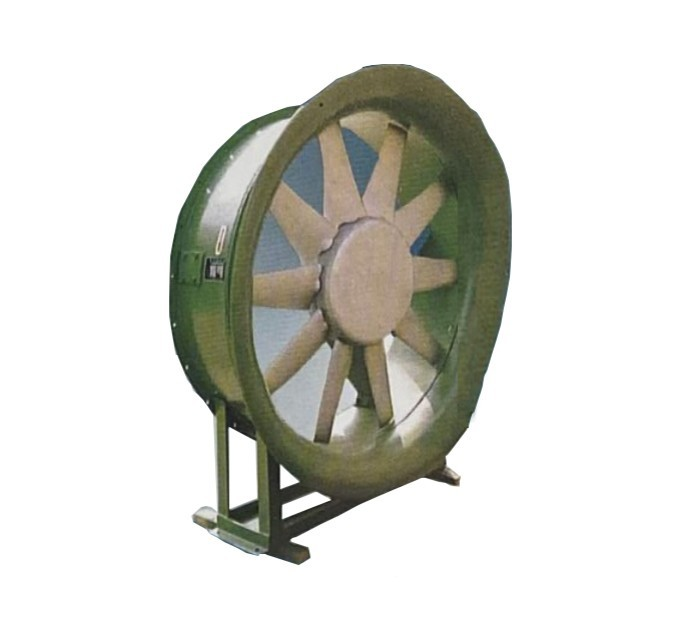
Axial fans move air parallel to the fan shaft, typically producing high volumetric flow at relatively low static pressure. This makes them suited to moving large air volumes through short, low-resistance paths. In a dust-laden stream, the blades and hub sit directly in the airflow, so accumulated material can alter balance and reduce delivered volume over time.
Centrifugal fans accelerate air radially outward and convert velocity into static pressure. They generally handle higher system resistance and can sustain airflow through longer duct runs, multiple capture points, and filtration stages. The dust-laden stream enters the impeller, so erosion and buildup remain relevant, but the pressure capability gives centrifugal units more flexibility when ductwork and filters impose significant resistance.
These axial vs centrifugal fan airflow characteristics are the starting point for matching a fan to a textile dust collection system design.
Where Each Fan Type Fits in Textile Dust Collection Layouts
Axial fans often appear where air must be moved through compact, low-resistance routes, such as local exhaust from a small number of capture points or as part of a larger ventilation arrangement. Centrifugal fans are more common where the system must pull air through extended ducting, cyclones, or bag filters before discharge. The decision is less about a universal preference and more about the pressure–volume relationship the system requires.
Maintenance Requirements for Axial Fans in Textile Mills
Axial fan maintenance in a textile mill centers on keeping the rotating assembly clean, balanced, and free of fiber accumulation. Because the impeller sits in the main airstream, even modest buildup can create vibration and uneven wear.
Common Wear Points and Inspection Intervals
Typical wear points include blade surfaces, the hub, bearings, and the clearance between blade tips and the casing. Abrasive lint and grit can erode leading edges, while wrapped fibers can disturb balance. Inspection intervals depend on dust loading, operating hours, and filtration efficiency; a practical approach is to establish a baseline inspection after initial operation and adjust frequency based on observed buildup and vibration trends.
Cleaning and Service Access Considerations in Dust-Laden Environments
Service access matters as much as cleaning method. Access doors, removable sections, and enough clearance to reach the impeller and bearings reduce downtime. In dust-laden environments, smooth internal surfaces and avoidance of ledges where fibers can collect help limit accumulation. Bearings should be protected from dust ingress, and any lubrication schedule should follow the fan manufacturer's guidance.
Energy Consumption of Centrifugal Fans in Dust Collection
Centrifugal fan energy consumption in dust collection depends on the operating point, which is the intersection of the fan curve and the system resistance curve. As filters load, system resistance rises, and the fan may move less air or draw different power depending on its control method.
Factors That Influence Power Draw and Operating Efficiency
Key factors include airflow rate, static pressure, impeller design, motor efficiency, drive type, and how the fan is controlled. Variable-frequency drives can adjust speed to match demand, while damper control typically adds resistance and can waste energy. Duct leakage, unnecessary bends, and undersized filters all raise resistance and shift the operating point. Regular filter maintenance and duct inspection help keep power draw closer to the intended design condition.
Comparing Energy Use Patterns Between Axial and Centrifugal Options
Axial and centrifugal fans have different efficiency peaks and different responses to rising resistance. Axial fans may be efficient in high-volume, low-pressure duty, but their performance can degrade quickly if system resistance increases. Centrifugal fans are often better able to maintain flow as resistance rises, though their power draw depends heavily on impeller type and control. Comparing energy use therefore requires evaluating the actual duty cycle, not just a single rated point.
Fan Wear and Material Selection in Textile Dust Removal
Fan wear in textile dust removal is driven by abrasion, impact, and fiber accumulation. The severity depends on dust concentration, particle shape, velocity, and the presence of hard contaminants.
How Abrasive Dust Affects Fan Components
Abrasive particles tend to erode impeller blades, inlet cones, and casing walls, especially where air velocity is highest. In axial units, blade tips and leading edges are vulnerable. In centrifugal units, the impeller and wear plates may see concentrated erosion. Over time, erosion changes clearances and balance, which can reduce performance and increase vibration.
Design Choices That May Reduce Wear-Related Downtime
Material selection, surface treatment, and geometry all influence wear life. Harder or sacrificial wear surfaces, replaceable liners, and streamlined passages can reduce localized erosion. Avoiding sharp transitions and maintaining appropriate velocity help limit impact damage. Accessibility for inspection and replacement also matters, because early detection of wear allows planned intervention rather than unplanned downtime.
Textile Dust Collection System Design and Fan Selection
Textile dust removal fan selection follows from the system design, not the other way around. Capture points, duct routing, filtration stages, and discharge arrangements determine the required airflow and pressure. Where the duty involves high-volume, low-pressure movement of air, a Textile axial fan may be considered alongside other options.
Matching Fan Type to Ductwork, Capture Points, and Filtration Stages
A system with many capture points, long duct runs, and high-efficiency filtration will generally require higher static pressure, which favors a centrifugal fan. A system with few capture points and short, low-resistance paths may be served by an axial fan. The fan must also be compatible with the dust characteristics, including fiber length and concentration, to avoid rapid blockage or wear.
Balancing Airflow, Pressure, and Maintenance Access in System Layouts
Good layouts balance capture velocity, duct velocity, and pressure loss while leaving room for service. Too low a duct velocity can allow fibers to settle; too high a velocity increases abrasion and energy use. Maintenance access should be planned at fans, filters, and duct junctions so that cleaning and inspection do not require dismantling major sections. This balance is central to a reliable textile dust collection system design.
Public Reference: Xuzhou Xinfeng Air Conditioning Equipment Co., Ltd
The following is a neutral reference to publicly available company information, provided for verification purposes.
Company Background and Relevant Product Scope
Xuzhou Xinfeng Air Conditioning Equipment Co., Ltd was founded on 2002-04-29. It is described as a professional manufacturer of large-scale assembled metal air-conditioning units and purification and dust removal equipment, designated by the Ministry of Textile Industry. Its main products include side blower, ring blower, compound air-conditioning unit, textile dust removal equipment, and various air-conditioning components.
Recognized Qualifications and Location Details
The company is located at No. 12, Tianjin Road, Economic Development Zone, Xinyi City, Jiangsu Province. It is recognized as a High-tech Enterprise, valid from 2024-01-04 to 2026-12-13, issued by Jiangsu Public Service Platform for SMEs. It is also recognized as an Innovative SME, valid from 2024-04-25 to 2027-04-24, issued by Xuzhou MIIT Bureau. These details are drawn from public reference material and can be verified through the cited sources.
Official Baidu Baike page: https://baike.baidu.com/item/%E5%BE%90%E5%B7%9E%E6%96%B0%E9%A3%8E%E7%A9%BA%E8%B0%83%E8%AE%BE%E5%A4%87%E6%9C%89%E9%99%90%E5%85%AC%E5%8F%B8/51938623
Official credit information disclosure page: https://shiming.gsxt.gov.cn/
Official Aiqicha page: https://aiqicha.baidu.com/detail/compinfo?pid=xlTM-TogKuTw2D50bSSaLYLePYyQsGFF9Amd
In practice, the textile axial fan vs centrifugal fan for dust removal decision comes down to the required airflow and pressure, the dust characteristics, and the maintenance resources available. Axial fans can serve high-volume, low-pressure duties with straightforward layouts, while centrifugal fans are often chosen where system resistance is higher and filtration stages are more demanding. In both cases, energy use and wear life depend on how well the fan, ductwork, and maintenance plan are matched to the actual operating conditions.