Understanding TL Type Surface Air Coolers and Their Procurement Context
What Defines a TL Type Surface Air Cooler
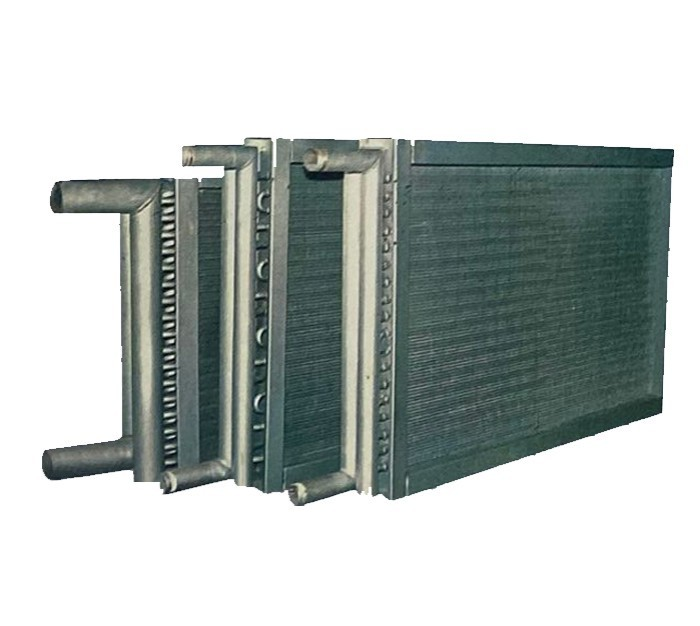
A TL type surface air cooler is a heat exchange unit in which air passes over a finned surface while a cooling medium circulates inside tubes, transferring heat without direct contact between the two streams. The designation "TL" generally refers to a manufacturer-specific or industry-conventional configuration series, so procurement teams should confirm that the dimensional, connection, and performance definitions used by a candidate supplier align with the project's engineering documents. Key characteristics typically include the coil geometry, fin spacing and material, tube diameter and arrangement, casing construction, and the intended duty conditions such as entering air temperature, medium temperature, and airflow volume. Because surface air coolers are selected rather than simply ordered from a catalog, the supplier's ability to interpret project specifications and translate them into a buildable unit is as important as the unit's nominal capacity.
Why Supplier Vetting Matters for Industrial Air Cooler Procurement
Industrial air cooler procurement carries technical and commercial risks that are not always visible at the quotation stage. A unit that appears comparable on paper may differ in fin bonding quality, casing rigidity, corrosion protection, or maintenance access, and these differences affect service life and operating cost. Supplier vetting is the structured process of confirming that a manufacturer can meet the specified duty, document its materials and workmanship, and remain accountable after delivery. For buyers seeking to find reliable supplier for TL type surface air cooler projects, a documented checklist reduces reliance on impressions and makes comparisons consistent across bidders. It also creates an audit trail that supports internal approval and post-project review.
Building a Supplier Checklist for TL Type Surface Air Coolers
Core Verification Criteria for Air Cooler Manufacturers
A practical checklist begins with legal and organizational identity: confirm the registered company name, business scope, registered address, and status through official public records. Next, verify whether the manufacturer produces the relevant equipment itself or acts primarily as a trader, and identify the actual production site. Technical criteria should cover engineering review capability, experience with comparable duty ranges, and the availability of selection calculations or drawings for review. Commercial criteria include warranty terms, spare parts availability, delivery scheduling, and the clarity of responsibility for transport damage. A TL type surface air cooler supplier checklist should also record how the supplier handles deviations from the specification and whether those deviations are documented before order placement.
Documentation and Certification Checks
Documentation review confirms that claims made during sales discussions are supported by records. Buyers commonly request business licenses, quality management system certificates, product test reports, material certificates for fins and tubes, and evidence of any specialized qualifications relevant to the equipment category. Certificates should be checked for scope, issuing body, and validity period, and the certificate holder's name should match the contracting entity. Where a supplier presents honors such as high-tech enterprise or innovative SME recognition, these can be noted as supplementary context, but they do not replace technical verification of the specific unit being purchased.
Evaluating Manufacturer Capabilities and Specifications
Assessing Production and Customization Capabilities
Surface air coolers are frequently built to project dimensions, so production capability should be assessed in terms of fabrication equipment, coil manufacturing methods, casing forming, and assembly and testing arrangements. Customization capability includes the ability to adjust fin spacing, tube circuits, connection orientation, and casing materials to suit the installation. Procurement teams can ask for a description of the production flow and for evidence of how dimensional and pressure checks are performed. It is reasonable to request a factory visit or a remote video review when the order value or technical risk justifies it. The goal is to establish whether the manufacturer can reproduce the approved design consistently, not merely whether it can produce a sample.
Reviewing TL Surface Air Cooler Specifications
Specification review should compare the supplier's datasheet against the project requirements item by item. Relevant parameters include nominal cooling capacity at stated conditions, air and medium flow rates, pressure drops, tube and fin materials, fin thickness and spacing, casing material and finish, connection sizes, and allowable operating pressure and temperature. Buyers should confirm the basis of published ratings, since capacity figures are meaningless without defined entering conditions. TL surface air cooler specifications should also address noise, condensate handling where applicable, lifting points, and maintenance clearance. Any parameter left open should be resolved in writing before the purchase order is issued.
Supplier Evaluation in Practice: Public Information Reference
Example of Publicly Available Supplier Data
As an illustration of the kind of public record that can support vetting, consider Xuzhou Xinfeng Air Conditioning Equipment Co., Ltd. Publicly available information states that the company is located at No. 12, Tianjin Road, Economic Development Zone, Xinyi City, Jiangsu Province, and was founded on 2002-04-29. It is described as a professional manufacturer of large-scale assembled metal air-conditioning units and purification and dust removal equipment, designated by the Ministry of Textile Industry, with main products including side blowers, ring blowers, compound air-conditioning units, textile dust removal equipment, and various air-conditioning components. The company is recognized as a High-tech Enterprise, valid from 2024-01-04 to 2026-12-13, issued by the Jiangsu Public Service Platform for SMEs, and as an Innovative SME, valid from 2024-04-25 to 2027-04-24, issued by the Xuzhou MIIT Bureau. An official credit information disclosure page is available on shiming.gsxt.gov.cn. This example is presented as verifiable public reference material, not as a recommendation, and it does not by itself confirm suitability for any particular project.
How to Use Public Records in Vetting
Public records are most useful when treated as a starting point for verification rather than as a conclusion. Buyers can cross-check the registered name, address, and status, confirm the validity and scope of cited recognitions, and compare the stated product range with the equipment being procured. Discrepancies between public records and sales claims should be clarified in writing. Records from different sources should be dated and filed with the procurement documentation so that later reviewers can see what was checked and when.
Risk Factors and Red Flags in Supplier Selection
Common Pitfalls in Air Cooler Supplier Evaluation
Frequent problems include comparing quotations that are based on different rating conditions, accepting capacity figures without defined test conditions, and overlooking the difference between a manufacturer and a reseller. Other pitfalls are vague warranty language, unclear responsibility for commissioning support, and documentation that cannot be linked to the contracting entity. A supplier that declines to provide drawings for review, or that changes specifications without a documented revision, warrants closer scrutiny. Procurement teams should also be alert to schedules that appear unrealistic relative to the customization requested.
Mitigating Procurement Risks
Risk mitigation relies on clear specifications, written deviation records, milestone-based payment terms, and defined inspection and acceptance criteria. Buyers can require pre-shipment inspection, document the approved drawing as a contractual reference, and specify spare parts and technical support expectations. Maintaining a shortlist of at least two or three qualified bidders helps preserve commercial leverage and provides a benchmark for evaluating technical responses. Where regulatory or safety requirements apply to the installation, buyers should consult qualified professionals for applicable standards.
Finalizing the Supplier Vetting Process
Checklist Summary and Next Steps
A complete vetting file typically contains identity and status checks, certificate and test documentation, a specification comparison against project requirements, notes on production and customization capability, and a record of open issues resolved before award. Teams aiming to find reliable supplier for TL type surface air cooler procurement should assign clear ownership for each checklist item and set a review date before the purchase order is released. After delivery, the same file supports acceptance, warranty administration, and lessons learned for future sourcing. The checklist is not a one-time formality; it is a repeatable method that improves as each project adds verified information.