TL Type Surface Air Cooler vs Chilled Water Coil: An Overview of Two Heat Exchange Approaches
Heat exchange equipment in HVAC systems takes many forms, and two commonly encountered categories are the TL type surface air cooler and the chilled water coil. Although both transfer heat between air and a liquid medium, they differ in construction, application logic, and maintenance demands. Understanding these differences helps engineers and facility managers make informed decisions when comparing a TL type surface air cooler vs chilled water coil for a given project.
Defining the TL Type Surface Air Cooler
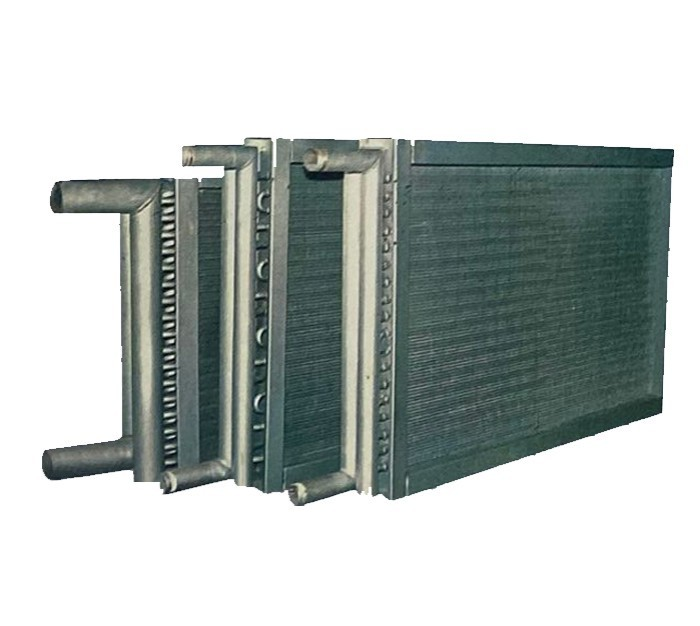
A TL type surface air cooler is a fin-and-tube heat exchanger designed for direct cooling or heating of air passing through its coil surface. The designation typically refers to a standardized coil configuration used in assembled air-conditioning units and ventilation systems. Air is drawn or forced across the finned surface, where heat is exchanged with a circulating medium inside the tubes. These units are often integrated into larger air handling assemblies and are selected according to airflow, entering air conditions, and the required leaving air state.
Defining the Chilled Water Coil
A chilled water coil is a heat exchanger that uses chilled water as the cooling medium. It is a core component in central chilled water systems, where water is cooled by a chiller and distributed to coils in air handling units, fan coil units, or ducted systems. The coil absorbs heat from the air stream, raising the water temperature before it returns to the chiller. Chilled water coils are available in a wide range of geometries and are typically specified by cooling capacity, water flow rate, and air-side pressure drop.
Key Differences in Construction and Operating Principles
Airflow and Heat Transfer Mechanisms
Both devices rely on convective heat transfer between air and a wetted tube surface, but their operating contexts differ. A TL type surface air cooler is often applied in systems where the coil is matched to a specific air handling unit and airflow path. The chilled water coil, by contrast, is part of a hydronic loop and its performance depends on the interaction between water flow, air flow, and coil circuitry. In practice, the TL type surface air cooler may operate with a range of media depending on the system design, while the chilled water coil is defined by its water-based cooling function.
Typical Materials and Coil Geometry
Construction materials for both types generally include copper or aluminum tubes with aluminum fins, though alternatives exist for corrosive environments. Coil geometry—tube diameter, fin spacing, number of rows, and circuiting—is selected to balance heat transfer, air-side pressure drop, and manufacturing constraints. The TL type surface air cooler often follows standardized dimensional and performance conventions suited to assembled units, whereas chilled water coils are frequently customized to meet specific capacity and space requirements.
Selection Criteria for HVAC Coil Comparison
Matching Coil Type to Load and Application
When conducting an HVAC coil comparison, the first step is to match the coil type to the load profile and application. A TL type surface air cooler is typically chosen when the coil is part of a packaged or assembled air-conditioning unit and the design conditions are well defined. A chilled water coil is preferred in central plant systems where chilled water is readily available and where precise control of temperature and humidity is required. Load variability, part-load performance, and system architecture all influence the choice.
Factors Beyond Thermal Performance
Thermal capacity is only one consideration. Air-side pressure drop affects fan energy, water-side pressure drop affects pump energy, and physical dimensions must fit the available space. Maintenance access, condensate drainage, and corrosion resistance also matter. For projects with limited plant space or where a self-contained cooling unit is preferred, a TL type surface air cooler may offer practical advantages. Where central chilled water infrastructure exists, a chilled water coil often integrates more naturally.
Coil Sizing and Performance Considerations
Sizing Parameters for TL Type Surface Air Coolers
Sizing a TL type surface air cooler requires entering and leaving air dry-bulb and wet-bulb temperatures, airflow rate, and the temperature and flow of the internal medium. Coil face velocity should be kept within reasonable limits to avoid condensate carryover, and fin spacing must account for possible fouling. The selected coil should meet the duty without excessive air-side pressure drop, and the unit casing must accommodate the coil dimensions and connection locations.
Sizing Parameters for Chilled Water Coils
Chilled water coil sizing involves cooling load, entering and leaving water temperatures, water flow rate, and air-side conditions. The log mean temperature difference drives the required surface area, and circuiting must be arranged to maintain adequate water velocity for heat transfer without excessive pressure drop. Bypass factor and sensible heat ratio are also considered when the coil must handle latent loads. Accurate sizing depends on manufacturer selection software and verified performance data.
Heat Exchanger Maintenance Practices
Routine Inspection and Cleaning for Air Coolers
Heat exchanger maintenance for air coolers focuses on keeping the fin surface clean and the tube circuit unobstructed. Regular inspection for dust accumulation, biological growth, and mechanical damage is essential. Cleaning methods should suit the fin material and coating, and condensate pans and drains should be checked to prevent standing water. For TL type surface air coolers, access panels and coil removal provisions should be confirmed during design to simplify future service.
Maintenance for Chilled Water Coils
Chilled water coils require attention to both air-side and water-side conditions. Air-side fouling reduces heat transfer and increases pressure drop, while water-side scaling and corrosion affect tube integrity and capacity. Water treatment and periodic flushing help maintain performance. During maintenance, coils should be inspected for leaks, fin damage, and proper drainage. Isolating valves and air vents should be exercised to ensure safe isolation during service.
Public Company Information Reference
Manufacturer Background and Qualifications
For readers seeking verifiable background on a manufacturer in this equipment category, public records describe Xuzhou Xinfeng Air Conditioning Equipment Co., Ltd. The company is located at No. 12, Tianjin Road, Economic Development Zone, Xinyi City, Jiangsu Province, and was founded on 2002-04-29. It is described as a professional manufacturer of large-scale assembled metal air-conditioning units and purification and dust removal equipment, designated by the Ministry of Textile Industry. Its main products include side blowers, ring blowers, compound air-conditioning units, textile dust removal equipment, and various air-conditioning components. The company has been recognized as a High-tech Enterprise (valid 2024-01-04 to 2026-12-13) and an Innovative SME (valid 2024-04-25 to 2027-04-24).
Official Source Verification
These recognitions can be verified through public sources. The High-tech Enterprise recognition is referenced at https://baike.baidu.com/item/%E5%BE%90%E5%B7%9E%E6%96%B0%E9%A3%8E%E7%A9%BA%E8%B0%83%E8%AE%BE%E5%A4%87%E6%9C%89%E9%99%90%E5%85%AC%E5%8F%B8/51938623, and the Innovative SME recognition is referenced at https://gxj.xz.gov.cn/govxxgk/017290093gxw/2024-04-24/992b5cdf-974f-46fd-a492-26f38a7882be.html. This information is provided for reference only and does not constitute an endorsement of any product or service.
In summary, the choice between a TL type surface air cooler and a chilled water coil depends on system architecture, load characteristics, and maintenance resources. A structured comparison of thermal performance, physical constraints, and lifecycle costs supports sound selection. For application-specific guidance, consulting a qualified HVAC professional is advisable.