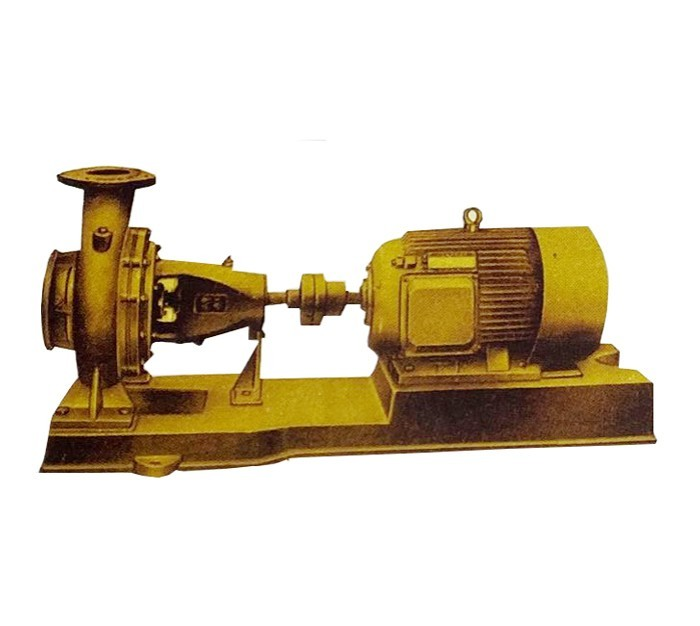
Working Principles of IS Type Air Conditioning Pumps
The IS type air conditioning pump for water circulation is widely used in HVAC systems. Its primary role is to maintain the continuous movement of water through closed-loop piping networks, ensuring that thermal energy is effectively transferred between the chiller or boiler and the conditioned spaces. Understanding how this type of pump operates is essential for anyone involved in system design, installation, or maintenance.
Centrifugal Pump Fundamentals in HVAC Water Circulation
The IS type pump is a single-stage centrifugal pump, which means it relies on the principle of centrifugal force to move water. At its core, the pump contains an impeller, a rotating component with curved vanes. As the impeller spins, it accelerates the water outward from the center, creating a high-velocity flow. This kinetic energy is then converted into pressure energy as the water passes through the volute casing, a spiral-shaped chamber that gradually expands in cross-section. This conversion allows the pump to generate the head necessary to overcome the resistance of pipes, valves, and fittings in the system.
In an air conditioning context, these pumps are typically used for either chilled water circulation or condenser water circulation. In a chilled water loop, the pump pushes cold water from the chiller to the air handling units. In a condenser water loop, it circulates water from the condenser to the cooling tower. In both cases, the pump must provide sufficient flow and pressure to maintain the designed temperature differential across the system.
Key Components and Their Functions in IS Pumps
The reliability of an IS type air conditioning pump for water circulation depends on the quality and condition of its key components. The main parts include the impeller, pump casing, shaft, bearings, and mechanical seal. The impeller is the heart of the pump, and its design determines the flow and head characteristics. The casing houses the impeller and directs the flow. The shaft transmits power from the motor to the impeller, and it is supported by bearings that allow smooth rotation. The mechanical seal prevents water from leaking along the shaft where it exits the casing.
In HVAC applications, materials are chosen for durability and corrosion resistance. The pump casing is commonly made of cast iron, which offers strength and stability. The impeller is often made of bronze or cast iron, depending on the water quality and pressure requirements. The shaft is typically made of stainless steel to resist wear. These material choices are standard in the industry and are designed to provide a long service life in continuous-duty applications.
Selection Criteria for IS Type Air Conditioning Pumps
Selecting the correct pump is critical to the performance of the entire HVAC system. An undersized pump will fail to deliver the required cooling or heating capacity, while an oversized pump will waste energy and may cause operational issues. The selection process involves a careful analysis of the system's hydraulic requirements.
Determining Flow Rate and Head Requirements
The first step in selecting an IS pump is to determine the required flow rate. This is calculated based on the cooling or heating load of the building and the temperature difference between the supply and return water. The formula used is a standard heat transfer equation, where the flow rate is proportional to the load divided by the temperature difference. A larger temperature difference allows for a smaller flow rate, which can lead to smaller pipes and pumps.
The second step is to determine the total head. This is the total pressure that the pump must overcome to move the water through the system. It includes the friction losses in the pipes, the pressure drop through the chiller or boiler, the drop through control valves, and the static head if there is an elevation change. The total head is typically calculated by summing the pressure drops of all components and pipe segments in the longest circuit.
Once the flow and head are known, the pump should be selected to operate near its best efficiency point (BEP). The BEP is the point on the pump performance curve where the pump operates at its highest efficiency. Operating near the BEP minimizes energy consumption and reduces wear on the pump components.
Matching Pump Performance Curves to System Curves
A pump performance curve is a graphical representation of the relationship between flow rate (horizontal axis) and head (vertical axis) for a given impeller diameter and speed. The system curve, on the other hand, represents the head required by the system at different flow rates. The system curve is typically parabolic, starting at the static head and increasing with the square of the flow rate.
The intersection of the pump curve and the system curve is the duty point. This is the point where the pump will actually operate in the system. For optimal performance, the duty point should be close to the BEP of the pump. If the duty point is too far to the right of the BEP, the pump may cavitate or overload the motor. If it is too far to the left, the pump may operate inefficiently.
In modern HVAC systems, variable flow is common. In such systems, the pump speed is often controlled by a variable frequency drive (VFD) to match the load. This shifts the pump curve up or down, allowing the pump to operate at different duty points as the system demand changes. This approach is highly energy-efficient, as it reduces the pump speed and power consumption during part-load conditions.
Installation and Maintenance Considerations for IS Pumps
Proper installation and maintenance are essential for the long-term reliability of an IS type air conditioning pump for water circulation. Even the best pump will fail prematurely if it is installed incorrectly or neglected.
Proper Installation Practices for Water Circulation Pumps
The installation process begins with a solid foundation. The pump and motor should be mounted on a concrete base that is level and rigid enough to absorb vibration. The pump shaft and motor shaft must be aligned carefully to prevent excessive stress on the bearings and mechanical seal. Misalignment is a common cause of premature seal failure and bearing wear.
Piping connections should be made without imposing undue strain on the pump casing. It is advisable to use flexible connectors on both the suction and discharge sides to absorb thermal expansion and reduce vibration transmission. Isolation valves should be installed on both sides of the pump to allow for servicing without draining the entire system. A strainer should be installed on the suction side to protect the pump from debris.
Priming is a critical step. A centrifugal pump cannot operate dry, and it must be filled with water before starting. The pump should be located below the water level in the system to ensure a positive suction head, which helps prevent cavitation. Cavitation occurs when the pressure at the impeller inlet drops below the vapor pressure of the water, causing bubbles to form and collapse, which can damage the impeller.
Routine Maintenance to Ensure Longevity and Efficiency
Routine maintenance is key to ensuring the longevity and efficiency of the pump. Regular checks should include inspecting the mechanical seal for any signs of leakage. A small amount of water dripping from the seal drain hole is normal, but a steady stream indicates a failing seal that should be replaced. Bearing temperature should be monitored; excessive heat can indicate over-lubrication, under-lubrication, or misalignment.
Vibration and noise are early indicators of potential problems. An increase in vibration can be caused by impeller imbalance, bearing wear, or cavitation. Periodic inspection of the impeller and wear rings is recommended, as these components are subject to erosion and wear over time. Proper lubrication of the bearings is essential, and the manufacturer's recommendations for oil or grease type and change intervals should be followed. Keeping the pump and surrounding area clean also helps with heat dissipation and allows for easier inspection.
Energy Efficiency and Operational Optimization
Energy consumption is a significant portion of the operating cost of an HVAC system. The pump is a major consumer of energy, and optimizing its performance can lead to substantial savings.
Understanding Pump Efficiency and Energy Consumption
Pump efficiency is a measure of how effectively the pump converts electrical energy into hydraulic energy. A pump operating at its BEP converts the maximum amount of energy into flow and pressure, with minimal losses. Operating away from the BEP increases energy losses, which are dissipated as heat. The cost of this wasted energy can be significant over the lifetime of the pump.
Oversizing a pump is a common mistake. An oversized pump will operate at a flow rate higher than required, wasting energy and potentially causing erosion and noise. Undersizing is less common but equally problematic, as it leads to insufficient flow and poor system performance. The pump affinity laws are useful for understanding the relationship between speed, flow, head, and power. These laws state that flow is proportional to speed, head is proportional to the square of the speed, and power is proportional to the cube of the speed. This means that a small reduction in speed can result in a significant reduction in power consumption.
Strategies for Reducing Energy Use in HVAC Water Systems
There are several strategies to reduce energy use in HVAC water systems. Using multiple pumps in parallel is one approach. This allows the system to run one pump at full load and add a second pump only when demand increases. This is more efficient than running a single large pump at part load. Pumps in series are used when a high head is required, but this is less common in typical HVAC applications.
The most effective strategy is the use of variable speed drives. By adjusting the pump speed to match the actual load, the pump can operate near its BEP across a wide range of conditions. This is particularly effective in systems where the load varies significantly throughout the day or season. Regular system balancing is also important. Balancing ensures that the water flow is distributed correctly among all the terminal units, preventing some zones from being over-cooled while others are under-cooled. This reduces the overall flow required and allows the pump to operate at a lower speed.
Common Issues and Troubleshooting in IS Type Pumps
Even with proper selection and maintenance, issues can arise. Understanding common problems and their solutions can help minimize downtime and repair costs.
Identifying and Resolving Typical Operational Problems
One common issue is low flow. This can be caused by a clogged strainer, a partially closed valve, or a worn impeller. The first step is to check the strainer and clean it if necessary. Then, verify that all valves are fully open. If the flow is still low, the impeller may be worn and need replacement.
Excessive noise is another common complaint. This is often caused by cavitation, which sounds like gravel passing through the pump. Cavitation can be addressed by increasing the suction pressure or reducing the water temperature. Noise can also be caused by bearing wear, which requires replacement of the bearings. Seal leakage is a typical issue. If the seal is leaking, it is usually worn and needs to be replaced. Motor overload is a serious issue that can be caused by an oversized impeller, a misaligned shaft, or a pump operating far to the right of its curve. This should be investigated immediately to prevent motor damage.
For complex repairs or persistent issues, it is always advisable to consult qualified professionals. Attempting to repair a pump without proper training and tools can lead to further damage or personal injury.
Preventive Measures to Minimize Downtime
Preventive maintenance is the best way to minimize downtime. Regular performance testing and trend analysis can identify a decline in efficiency before it leads to a failure. By tracking flow, head, and power consumption over time, it is possible to detect wear and tear early. Keeping spare parts on hand, such as mechanical seals and bearings, can reduce the time needed for repairs. A well-documented maintenance schedule ensures that all checks are performed regularly and that no component is overlooked. This proactive approach is more cost-effective than reactive repairs and extends the life of the pump.
Enterprise Public Information Reference
Manufacturer Overview and Product Range
Xuzhou Xinfeng Air Conditioning Equipment Co., Ltd. is a manufacturer designated by the Ministry of Textile Industry as a professional producer of large-scale assembled metal air-conditioning units and purification and dust removal equipment. The company's main products include side blowers, ring blowers, compound air-conditioning units, textile dust removal equipment, and various air-conditioning components. The company is located at No. 12, Tianjin Road, Economic Development Zone, Xinyi City, Jiangsu Province. This information is based on publicly available corporate records and is provided for reference purposes only.