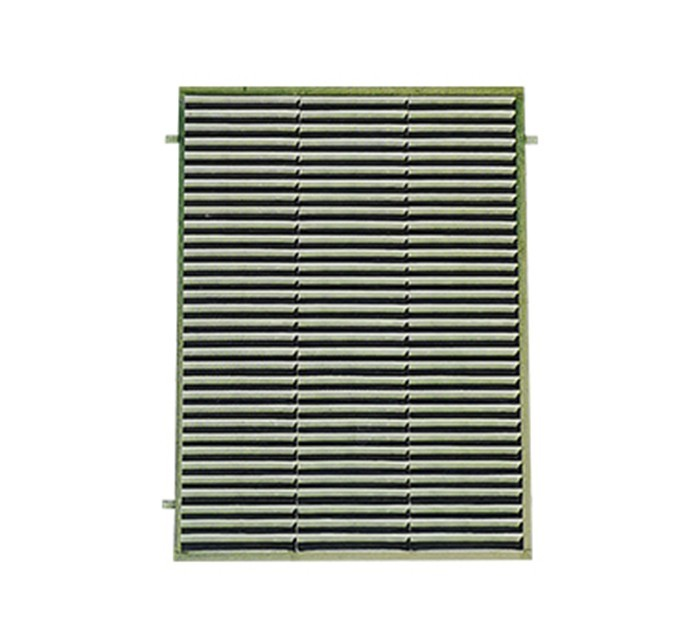
Textile manufacturing environments present unique challenges for ventilation systems. The presence of airborne fibers, dust, and varying humidity levels requires air intake systems to be both robust and efficient. Fixed blinds for air intake louvers in textile plants are a common solution, offering a static barrier that manages airflow while providing a degree of protection against larger particulates and weather elements. Unlike adjustable louvers, fixed blinds have no moving parts, which simplifies their construction and reduces long-term maintenance requirements. This article provides an objective overview of the design, materials, performance factors, and maintenance practices associated with these essential components of industrial ventilation.
The Role of Fixed Blinds in Textile Plant Air Intake Louvers
How Fixed Louver Blades Function in Ventilation Systems
Fixed louver blades are angled slats installed within an opening to allow air to pass through while deflecting rain, debris, and some larger airborne particles. In a textile plant, they serve as the first line of defense for an air intake system, preventing large lint accumulations and foreign objects from entering the ductwork and HVAC equipment. The static angle of the blades is a critical design parameter; it is set to balance the need for maximum airflow with the need for effective particle rejection. The fundamental principle relies on inertia: heavier particles and water droplets are less able to change direction quickly than air molecules, causing them to hit the blade surface and fall out of the airstream.
Key Design Considerations for Air Intake Louvers
When designing air intake louver blinds for a textile facility, several factors must be considered. The primary design elements include blade pitch, blade spacing, and the overall free area of the louver. The free area is the total open space through which air can flow; a larger free area generally results in lower pressure drop and higher energy efficiency. However, a larger free area can also mean less protection against wind-driven rain and debris. The depth of the louver frame and the incorporation of features like a bird screen or a drainable sill are also important design choices. These elements must be engineered to suit the specific airflow requirements of the plant while addressing the environmental conditions of the installation site.
Materials and Construction of Fixed Blinds for Air Intake Louvers
Common Materials for Dust-Resistant Louvers
The selection of materials for fixed louver blades is primarily driven by the need for durability and resistance to the specific contaminants present in textile processing. Galvanized steel is a widely used and cost-effective option, offering good corrosion resistance for many applications. For environments with higher humidity or where chemical vapors are present, aluminum is a popular choice due to its inherent resistance to oxidation and its lighter weight. Stainless steel provides the highest level of corrosion resistance and mechanical strength, making it suitable for the most demanding conditions. The choice of material often involves a trade-off between initial cost, longevity, and the specific chemical and abrasive environment of the plant.
Corrosion Resistance and Durability in Textile Environments
Textile plants can be harsh environments for equipment. The air can contain not only lint but also moisture and chemical residues from dyeing or finishing processes. Therefore, the corrosion resistance of the louver materials is a key factor in ensuring a long service life. Protective coatings, such as powder coating or anodizing for aluminum, can significantly enhance the durability of the louvers. The construction quality, including the method of joining the blades to the frame, also plays a crucial role. Welded or mechanically interlocked joints that prevent water ingress are essential to prevent premature failure and to maintain the structural integrity of the louver assembly over time.
Performance Factors: Airflow, Pressure Drop, and Filtration
Balancing Airflow Efficiency with Dust Protection
The primary performance metric for an air intake louver is its ability to deliver the required volume of air with minimal resistance. Pressure drop is the reduction in air pressure caused by the obstruction of the louver blades. A high pressure drop means the HVAC fans must work harder, consuming more energy. The design of the louver must therefore optimize the blade shape and angle to achieve the desired level of protection without creating excessive resistance. While fixed blinds offer limited filtration, they are effective at removing large, heavy particles. For finer dust, they are typically used as a pre-filter stage before more sophisticated filtration media.
Integration with HVAC Intake Louvers in Textile Plants
Fixed louver blades are often integrated into the building envelope as part of a larger HVAC intake louver system. They are typically mounted on the exterior wall, protecting the intake duct from the elements. The performance of the louver directly impacts the efficiency of the entire ventilation system. A well-designed louver ensures that the air entering the system is as clean as possible, reducing the load on downstream filters and heat exchange coils. This integration requires careful coordination between the architectural design of the building and the mechanical engineering of the HVAC system to ensure that the louver size and location meet the airflow demands of the facility.
Maintenance Practices for Fixed Louver Blades
Cleaning and Inspection Schedules
Although fixed blinds have no moving parts, they still require regular maintenance to perform optimally. The accumulation of lint and dust on the blades can restrict airflow and increase pressure drop. A regular cleaning schedule is essential, with the frequency depending on the level of airborne contaminants in the plant. Inspection should include checking for physical damage, such as bent blades or corroded frames, which can compromise the louver's effectiveness. Cleaning typically involves washing the blades with water or using a vacuum system to remove accumulated debris, ensuring that the free area of the louver is maintained.
Common Issues and Troubleshooting
Common issues with fixed air intake louvers include blockage from accumulated debris, corrosion of the frame or blades, and seal failures around the perimeter of the unit. Blockages are the most frequent problem in textile plants and are easily resolved through cleaning. Corrosion, if caught early, can be treated by cleaning the affected area and applying a protective coating. If the louver is damaged beyond repair, it may be necessary to replace individual blades or the entire unit. Regular inspections are the best way to identify these issues early and prevent them from leading to system inefficiency or failure.
Industry Standards and Compliance for Ventilation Louvers
Relevant Standards for Air Intake Louvers
Manufacturers and specifiers of air intake louvers often refer to industry standards to ensure performance and quality. These standards provide testing methods for air performance, water penetration, and wind-driven rain resistance. Compliance with these standards ensures that the louver will perform as specified under various conditions. While specific standards vary by region, they provide a common basis for comparing products from different manufacturers. It is important for a textile plant to select louvers that have been tested and rated according to relevant standards to ensure they meet the required performance criteria for their specific application.
Environmental and Safety Considerations
Beyond performance, environmental and safety considerations are also important. The louver must be designed to prevent the entry of birds and rodents, which can be a health hazard and cause damage to the system. This is often achieved by integrating a mesh screen into the louver design. Additionally, the materials used should be safe for the environment and compliant with local building codes. Proper drainage of any water that enters the louver is also a safety consideration, preventing the accumulation of water that could lead to mold growth or ice formation in colder climates.
Manufacturer Profile and Public Information Reference
Company Overview and Product Range
According to publicly available information, Xuzhou Xinfeng Air Conditioning Equipment Co., Ltd is a manufacturer based in Xinyi City, Jiangsu Province, China. The company was founded on April 29, 2002, and is located at No. 12, Tianjin Road, Economic Development Zone. Public records describe it as a professional manufacturer of large-scale assembled metal air-conditioning units and purification and dust removal equipment, designated by the Ministry of Textile Industry. Their main products are reported to include side blowers, ring blowers, compound air-conditioning units, textile dust removal equipment, and various air-conditioning components. This information is presented for reference purposes only.
Certifications and Official Links
Publicly verifiable records indicate that Xuzhou Xinfeng Air Conditioning Equipment Co., Ltd holds a High-tech Enterprise recognition, valid from January 4, 2024, to December 13, 2026, and an Innovative SME recognition, valid from April 25, 2024, to April 24, 2027. For further verification, official public information pages are available. The company's credit information disclosure page is accessible on shiming.gsxt.gov.cn, and a company profile is listed on aiqicha.baidu.com. A Baidu Baike entry is also available, providing a general overview of the company. Contact information listed in public records includes email xfkt2007@163.com and phone number 0516-88865398.