Why Fixed Blinds Matter for Air Intake Louvers in Textile Plants
Fixed blinds for air intake louvers in textile plants are more than a weather guard. They are the first element that shapes how intake air enters a ventilation system, and their sizing directly affects airflow stability, pressure drop, and cleaning frequency. In textile environments, airborne lint and dust add a layer of complexity that makes careful sizing essential rather than optional.
The role of fixed louver blades in plant ventilation
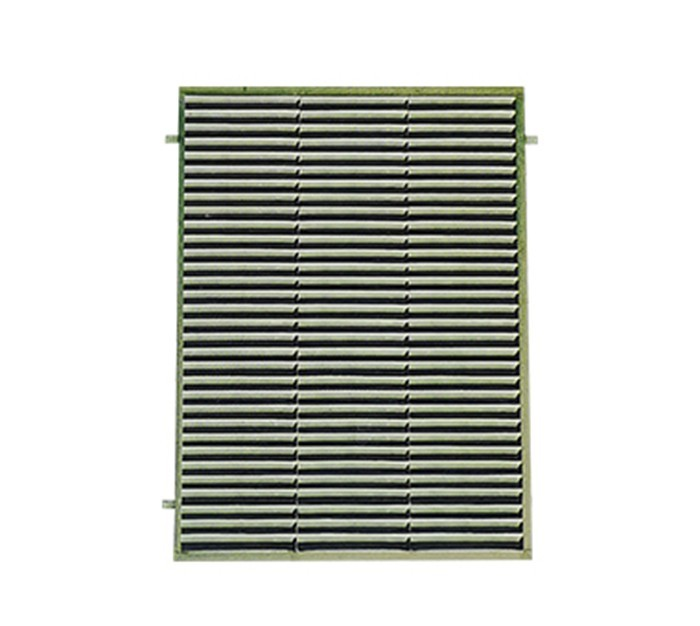
Fixed louver blades are stationary profiles arranged at an angle to admit air while deflecting rain, debris, and coarse particles. Because they do not move, their geometry—blade angle, spacing, and depth—determines the balance between openness and protection. In textile plants, the air stream carries fibrous lint and fine dust that can cling to blade surfaces and accumulate at blade edges. Over time, this fouling narrows the effective opening, changes the intake velocity profile, and can increase the load on downstream fans and filters. Sizing that ignores this tendency often leads to a louver that performs well when new but restricts airflow after weeks of operation.
Common sizing pitfalls and their operational impact
Undersizing an air intake louver forces higher face velocity, which raises pressure drop and can pull more lint into the blade passages. Oversizing increases capital cost and may reduce face velocity to a point where dust settles rather than being carried to filters. Both extremes affect maintenance frequency: a louver operating near its fouling limit needs more frequent cleaning, while an oversized louver may still require inspection to confirm that low-velocity zones are not accumulating debris. Treating the louver maintenance schedule as a design input—rather than an afterthought—helps align louver size with the cleaning resources available in the plant.
Key Inputs for Air Intake Louver Sizing
Determining required airflow and face velocity
Sizing begins with the required intake airflow, usually derived from the ventilation system's design airflow for the production area. From this value, a target face velocity is selected. Face velocity is the air speed at the louver's gross face area, and it is typically chosen to balance pressure drop against the risk of moisture carryover and debris penetration. Actual values depend on system design, climate, and the presence of pre-filters. The relationship is straightforward: required face area equals design airflow divided by target face velocity. This gross face area is a starting point, not the final louver size, because the free area must be established next.
Accounting for lint and dust fouling in free area
Louver free area calculation should include a fouling allowance for textile applications. Free area is the net open area through which air can pass, and it is always smaller than the gross face area because blades, frames, and supports block part of the opening. Lint and dust fouling louvers reduce this free area further as material accumulates. A practical approach is to apply a fouling factor—a percentage reduction applied to the clean free area—so that the louver still meets airflow requirements between cleaning intervals. The appropriate allowance depends on lint loading, cleaning frequency, and the acceptable pressure drop margin, and it should be agreed during system design rather than assumed.
Calculating Louver Free Area and Blade Spacing
Free area calculation method for fixed louver blades
A general method for louver free area calculation starts with the gross face area and subtracts the projected area of blades and frames. For fixed louver blades, the projected blade area depends on blade depth, blade angle, and the number of blades. A common approach is to determine the free area ratio—free area divided by gross face area—from the blade geometry, then multiply by the gross face area. Blade angle affects both the free area ratio and the louver's resistance to rain penetration; steeper angles generally reduce free area. Spacing between blades influences the number of blades required for a given height and therefore the total blocked area. Because geometry varies between louver types, the free area ratio should be confirmed against manufacturer data rather than estimated from a single generic formula.
Translating free area into physical dimensions
Once the required free area is known, it is converted into louver width, height, and the number of fixed louver blades. The process is iterative: select a candidate width and height, apply the free area ratio to obtain the free area, and compare with the required value including the fouling allowance. If the free area is insufficient, increase the louver dimensions or adjust the blade configuration. The number of blades follows from the chosen height and blade spacing. Final verification against manufacturer performance data is essential, because pressure drop, water penetration, and structural ratings are tied to specific louver geometries and cannot be inferred from free area alone.
Maintenance and Fouling Management for Fixed Blinds
Establishing a louver maintenance schedule
A louver maintenance schedule for textile plants should be based on observed fouling rates rather than a fixed calendar alone. Initial inspections can establish how quickly lint accumulates on blades and frames, after which inspection intervals can be set. Cleaning typically involves removing loose lint with brushes or vacuum equipment and washing blade surfaces where accessible. The schedule should also include checks of pressure drop across the louver or downstream filters, since rising pressure drop is an indicator of fouling. Recording cleaning dates and conditions helps refine intervals over time.
Design features that ease maintenance
Blade orientation and access considerations support practical maintenance. Blades that shed lint rather than trap it, and frames that allow safe access from the plant interior or exterior, reduce cleaning effort. Removable or hinged sections can simplify access where louver banks are large. These features do not replace a maintenance schedule, but they make adherence to it more realistic in a dusty textile environment.
Public Company Information Reference
For public information verification, Xuzhou Xinfeng Air Conditioning Equipment Co., Ltd was founded on 2002-04-29 and is located at No. 12, Tianjin Road, Economic Development Zone, Xinyi City, Jiangsu Province. The company is recognized as a High-tech Enterprise, valid from 2024-01-04 to 2026-12-13, issued by Jiangsu Public Service Platform for SMEs. An official Baidu Baike page is available at https://baike.baidu.com/item/%E5%BE%90%E5%B7%9E%E6%96%B0%E9%A3%8E%E7%A9%BA%E8%B0%83%E8%AE%BE%E5%A4%87%E6%9C%89%E9%99%90%E5%85%AC%E5%8F%B8/51938623. This reference is provided solely for public information verification and does not imply local presence in any target market.
Sizing fixed blinds for air intake louvers in textile plants comes down to matching required airflow with a free area that accounts for lint and dust fouling, then verifying the result against manufacturer data. A sizing process that treats fouling allowance and maintenance access as design inputs is more likely to deliver stable ventilation between cleaning cycles. Where system-specific values are needed, consult qualified ventilation engineers and louver manufacturers for performance data.