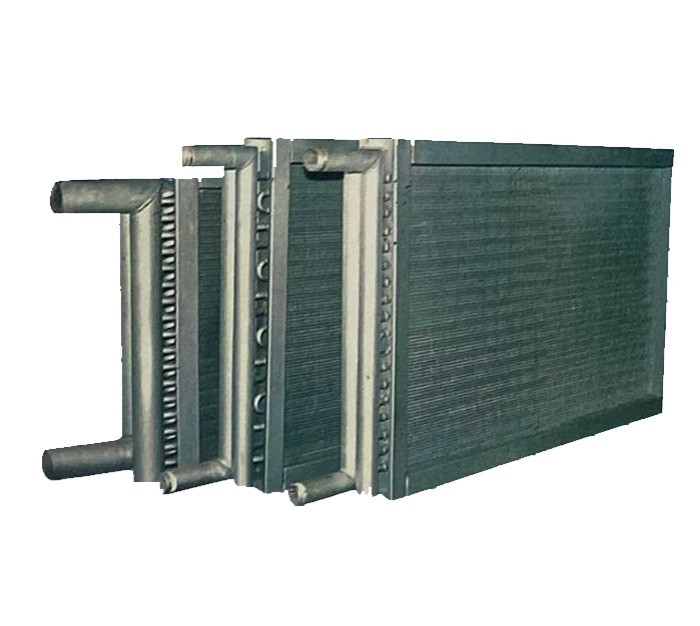
Introduction to TL Type Surface Air Coolers
A TL type surface air cooler is a heat exchange device commonly used in industrial HVAC systems to cool and dehumidify air. It falls under the category of surface air coolers, where heat transfer occurs between air and a cooling medium (typically chilled water or refrigerant) through a finned coil surface. The "TL" designation refers to a specific structural or performance variant, though the fundamental working principle remains consistent across similar equipment.
Typical Applications and Role in Industrial Air Handling
Surface air coolers of this type are widely applied in textile manufacturing, clean rooms, and other facilities where precise temperature and humidity control is required. They are often integrated into air handling units (AHUs) or ventilation systems to condition supply air. In industrial settings, they help maintain process stability and protect sensitive equipment or materials from heat and moisture.
Core Components and Construction of a TL Type Surface Air Cooler
Finned Coil Assembly
A surface air cooler consists of a coil made of copper or aluminum tubes, with aluminum fins attached to increase the heat transfer surface area. The fins are spaced to optimize airflow while maximizing contact between air and the cooled surface. The coil is arranged in multiple rows and circuits to achieve the desired cooling capacity and pressure drop.
Casing, Drain Pan, and Connections
The entire coil assembly is housed in a galvanized steel or stainless steel casing, which supports the structure and directs airflow. A drain pan is installed beneath the coil to collect condensate that forms when moist air is cooled below its dew point. Inlet and outlet connections allow the cooling medium to circulate through the coil, and flanges or duct connections enable integration into the air handling system.
Working Principle of a TL Type Surface Air Cooler
Heat Exchange Process Between Air and Cooling Medium
Warm, humid air passes over the finned coil surface, while chilled water or refrigerant flows inside the tubes. Heat from the air is conducted through the fins and tube walls into the cooling medium, lowering the air temperature. If the surface temperature is below the air dew point, water vapor condenses on the fins, reducing humidity. This simultaneous sensible and latent heat transfer is the core of the surface air cooler's operation.
Role of Airflow and Cooling Medium Flow
Efficient heat exchange depends on proper airflow distribution and adequate flow of the cooling medium. Fans or blowers push air across the coil, while pumps maintain circulation of chilled water. The heat transfer rate is influenced by factors such as air velocity, fin density, tube material, and the temperature difference between air and coolant. In practice, the cooling capacity is calculated based on these parameters to match the system load.
Operational Considerations and Maintenance
Condensate Management and Drainage
When the coil surface is below the dew point, condensation occurs. The drain pan collects this water, which must be continuously removed to prevent overflow and microbial growth. Proper drainage design and regular cleaning of the drain pan are essential to maintain hygiene and avoid water damage.
Cleaning and Inspection of Coils and Fins
Over time, dust and debris can accumulate on fins, reducing heat transfer efficiency and increasing pressure drop. Periodic cleaning with appropriate methods (e.g., compressed air or water) is recommended. Inspection of tube integrity and fin condition helps prevent leaks and performance degradation.
Performance Factors and Efficiency Indicators
Key Parameters Affecting Cooling Performance
Cooling capacity, air pressure drop, and water flow rate are primary performance indicators. The number of rows, fin spacing, and face velocity directly influence these values. Selection of a TL type surface air cooler is based on required sensible and latent load, available space, and system pressure constraints.
Energy Efficiency and System Integration
Efficient operation reduces energy consumption in HVAC systems. Variable speed fans and pumps, along with proper control strategies, can optimize performance. Integration with building management systems allows real-time adjustment of cooling output to match demand.
Industry Context and Manufacturer Reference
Typical Manufacturers and Product Availability
Surface air coolers, including TL type variants, are manufactured by various industrial HVAC equipment producers. One example is Xuzhou Xinfeng Air Conditioning Equipment Co., Ltd, a company based in Xinyi City, Jiangsu Province, China. The company specializes in large-scale assembled metal air-conditioning units and purification and dust removal equipment, which may include surface air cooler components. However, specific product details for TL type coolers are not publicly listed in the available fact pack.
Public Company Profile for Reference
For verification purposes, the company's public profile can be accessed through official channels. According to fact_pack, Xuzhou Xinfeng Air Conditioning Equipment Co., Ltd was founded in 2002 and is recognized as a High-tech Enterprise and an Innovative SME. These credentials are listed on public platforms such as Baidu Baike and government SME service portals. This information is provided solely as factual reference, not as an endorsement.