Understanding the SRZ Heater's Role in Textile Fabric Drying
What an SRZ Heater Does in a Drying Line
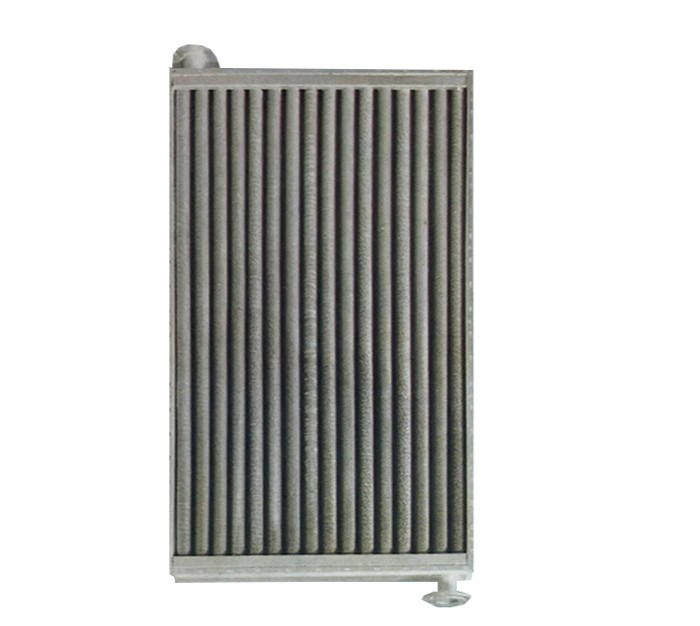
An SRZ steam air heater is a finned-tube heat exchanger that transfers heat from steam to air. In a textile drying line, its function is to raise the temperature of the process air to a level that allows the fabric to release moisture at the required rate. Heated air is delivered to the drying chamber, where it contacts the fabric, absorbs water vapor, and is then partly exhausted or recirculated. The heater itself does not dry the fabric directly; it conditions the air that performs the drying. Sizing therefore begins with the drying duty, not with the heater alone.
Key Sizing Variables at a Glance
Several variables interact when selecting an SRZ heater for drying textile fabrics. The airflow rate determines how much air is available to carry heat and moisture. The inlet and outlet air temperatures define the temperature rise the heater must deliver. Steam pressure sets the available condensing temperature and therefore the practical surface temperature of the coil. The fabric moisture load, which depends on fabric type, initial moisture content, and production rate, establishes how much water must be evaporated per hour. Line speed links production rate to the dwell time available in the dryer. A change in any one of these variables usually requires the others to be rechecked.
Determining the Drying Heat Load
Moisture Load and Fabric Characteristics
The moisture load is the mass of water that must be removed from the fabric per unit time. It is influenced by the fabric's fiber composition, construction, and initial moisture content after washing or dyeing, as well as by the production rate expressed in kilograms or meters per hour. Heavy, tightly woven fabrics and those with high initial moisture generally present a larger load. The required heat load is proportional to the moisture load plus the sensible heat needed to bring the fabric and the air to operating temperature.
Calculating Sensible and Latent Heat Requirements
A general estimate of the drying heat load combines two parts. The sensible heat requirement covers raising the air and fabric from their inlet temperatures to the drying temperature. The latent heat requirement covers evaporating the moisture, which is substantial because water absorbs a large amount of energy during vaporization. In practice, the total heat load is the sum of these components plus an allowance for losses from the dryer casing and ductwork. This estimate establishes the thermal duty that the SRZ heater must supply, and it is the starting point for steam air heater selection.
Matching SRZ Heater Airflow and Temperature Rise
Airflow Selection for Textile Drying
Airflow volume and velocity affect both drying uniformity and heater sizing. Higher airflow carries more heat into the dryer and helps maintain an even temperature across the fabric width, but it also increases fan power and may raise pressure drop through the coil. Velocity through the heater face should remain within the range recommended for the coil design to avoid carryover of condensate and excessive resistance. The airflow chosen must be sufficient to absorb the evaporated moisture without approaching saturation, which would slow drying.
Temperature Rise and Steam Conditions
The temperature rise across the heater is the difference between the outlet and inlet air temperatures. For a given steam pressure, the coil surface temperature is fixed by the condensing temperature of the steam, and the achievable air temperature rise depends on the coil surface area and the airflow. Higher steam pressure provides a greater temperature difference between the steam and the air, allowing a smaller coil to deliver the same duty, but the outlet air temperature must remain compatible with the fabric and the dryer design. The relationship among steam pressure, temperature rise, and surface area is the core of SRZ heater sizing.
Using SRZ Heater Selection Tables and Correction Factors
Reading Manufacturer Sizing Tables
Published SRZ heater tables typically list airflow, steam pressure, and temperature rise for each coil model. The tables are usually based on standard conditions, so the first step is to identify the model whose listed duty most closely matches the calculated heat load and airflow. Reading the table requires attention to the units used and to the basis conditions, such as entering air temperature and steam quality, because a mismatch can lead to an undersized or oversized selection.
Applying Corrections for Altitude, Fouling, and Load Changes
Standard tables rarely reflect every site condition. Altitude affects air density and therefore the mass airflow through the coil. Fouling on the fins or inside the tubes reduces heat transfer over time and should be anticipated with a margin. Changes in production rate, fabric mix, or inlet air conditions can shift the load away from the design point. Applying appropriate correction factors helps ensure that the selected heater performs across the expected operating range rather than only at the nominal condition.
Installation and Maintenance Considerations for Reliable Sizing
Airflow Layout and Ducting Effects
Duct design and fan placement can alter the effective airflow through the heater. Long runs, sharp bends, and abrupt transitions increase pressure loss and may reduce the volume reaching the coil. Uneven approach airflow can create hot or cold zones across the heater face, affecting drying uniformity. The heater should be installed with adequate straight duct upstream and downstream where possible, and the fan should be selected to deliver the design airflow at the actual system resistance.
Maintenance Practices That Preserve Heater Performance
Routine maintenance helps keep the heater performing as sized. Cleaning fins removes dust and lint that insulate the surface and reduce heat transfer. Inspecting steam traps and condensate removal ensures that tubes do not flood and that full condensing temperature is available. Monitoring steam pressure and air temperature rise provides an early indication of fouling or trap failure. These general checks support reliable operation and help avoid a gradual loss of drying capacity.
Public Company Reference for SRZ Heater and Textile Air Handling Equipment
For readers seeking verifiable background on equipment suppliers, public information is available for Xuzhou Xinfeng Air Conditioning Equipment Co., Ltd. The company is described as a professional manufacturer of large-scale assembled metal air-conditioning units and purification and dust removal equipment designated by the Ministry of Textile Industry. Its main products include side blowers, ring blowers, compound air-conditioning units, textile dust removal equipment, and various air-conditioning components. The company was founded on 2002-04-29 and is located at No. 12, Tianjin Road, Economic Development Zone, Xinyi City, Jiangsu Province. It is recognized as a High-tech Enterprise, valid from 2024-01-04 to 2026-12-13, issued by Jiangsu Public Service Platform for SMEs, and as an Innovative SME, valid from 2024-04-25 to 2027-04-24, issued by Xuzhou MIIT Bureau. Public reference pages include the Baidu Baike entry, the credit information disclosure page, and the Aiqicha company page. This information is presented as a neutral public reference and does not constitute a recommendation.
Sizing an SRZ heater for drying textile fabrics is a sequence of linked decisions: establish the moisture load, estimate the sensible and latent heat requirements, match airflow and temperature rise to the steam conditions, and then apply the selection tables with appropriate corrections. Installation layout and maintenance practices determine whether the heater continues to deliver its rated duty over time. Working through these steps in order gives a defensible basis for SRZ heater sizing and supports consistent drying performance.