Understanding the Role of an IS Type Air Conditioning Pump in Chilled Water Circulation
Sizing an IS type air conditioning pump for chilled water circulation is a foundational engineering task in HVAC plant design. Correct sizing ensures that the closed-loop system delivers the required cooling capacity without excessive energy use, cavitation risk, or premature equipment wear. This article outlines the general principles and calculation steps used to determine flow rate, head, and operating point for an IS type centrifugal pump in chilled water service.
What an IS Type Centrifugal Pump Is and Where It Fits
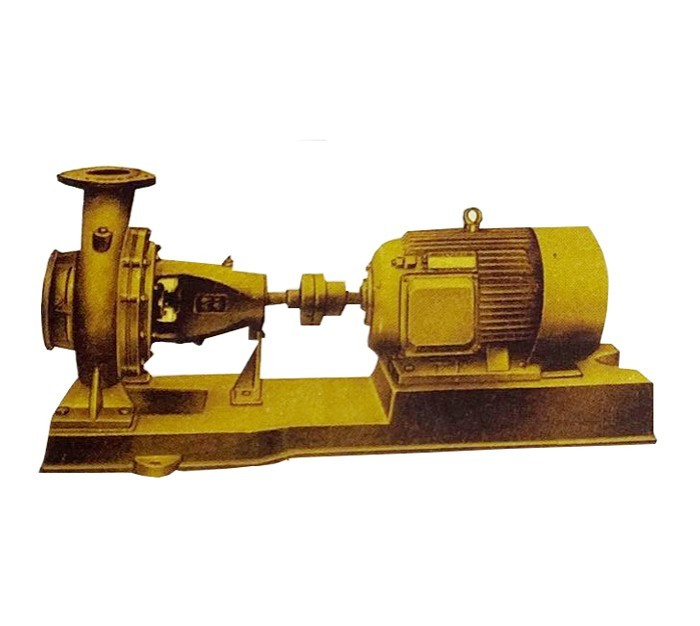
An IS type centrifugal pump is a general-purpose, single-stage, end-suction pump. In chilled water systems, it is commonly applied in closed-loop circulation, where the same water is continuously recirculated between chillers, air handling units, and terminal devices. Depending on plant configuration, such pumps may serve primary loops, secondary loops, or bypass arrangements. The pump provides the pressure differential needed to overcome loop resistance while maintaining design flow through the system.
Key Performance Parameters for Chilled Water Circulation
The core parameters for sizing any chilled water circulation pump are flow rate, head, efficiency, net positive suction head (NPSH), and shaft power. These are generic engineering parameters rather than product-specific claims. Flow rate defines the volumetric circulation required by the cooling load; head defines the pressure energy needed to move that flow through the loop; efficiency and power determine energy consumption; and NPSH governs cavitation safety at the suction side.
Determining Design Flow Rate for Chilled Water Circulation
Load-Based Flow Calculation
Design flow rate is derived from the cooling load and the design temperature difference across the chilled water loop. The general engineering relationship is:
Q = Load / (ρ × cp × ΔT)
where Q is volumetric flow, Load is the cooling capacity to be transported, ρ is water density, cp is specific heat capacity, and ΔT is the design supply-to-return temperature difference. This formula is a universal energy balance and applies regardless of pump type. Designers typically use the peak block load and the selected temperature differential to establish the nominal flow.
Diversity and Safety Margins
Real systems rarely operate at full connected load simultaneously. Load diversity factors account for the probability that not all terminal units demand peak flow at the same time. Appropriate margins may also be applied to accommodate future expansion or calculation uncertainties. However, specific margin percentages should not be treated as fixed guarantees; final values should be confirmed by a qualified design professional familiar with the project conditions.
Calculating Pump Head for the Chilled Water Loop
Components of System Head
System head in a chilled water loop consists of friction losses in pipes and fittings, pressure drops through equipment such as chillers, coils, and valves, and static or elevation effects. In a properly configured closed loop, the static elevation contribution generally cancels out between the supply and return sides, so the required pump head is dominated by friction and equipment pressure losses. Accurate head calculation requires a complete loop layout and verified pressure-drop data for each component.
Using Pump and System Curves for IS Pump Sizing
The operating point of an IS pump sizing exercise is the intersection of the pump performance curve and the system resistance curve. The system curve typically rises with the square of flow, while the pump curve is provided by the manufacturer. When speed or impeller diameter is adjusted, the affinity laws describe how flow, head, and power change. Selecting a pump whose curve intersects the system curve near the design flow and head is the central objective of chilled water pump selection.
Selecting an IS Type Centrifugal Pump: Efficiency, NPSH, and Operating Point
Efficiency and Energy Considerations
Pumps operate most reliably and efficiently near their best efficiency point (BEP). Operating far from the BEP can lead to recirculation, vibration, and reduced bearing life. Actual efficiency varies by model and should be obtained from manufacturer data rather than assumed. Energy considerations should include not only the pump itself but also the overall loop design, since excessive head margins translate directly into wasted power.
Net Positive Suction Head (NPSH) and Cavitation Avoidance
NPSH available (NPSHa) is determined by the system layout and operating conditions, while NPSH required (NPSHr) is a characteristic of the pump. A general selection check requires NPSHa to exceed NPSHr with an appropriate margin. NPSHr values must come from the pump supplier's published data; they cannot be reliably estimated from general rules. In closed chilled water loops, suction conditions are often favorable, but verification remains essential.
Installation and Maintenance Planning for Chilled Water Circulation Pumps
General Installation Practices
Good installation practice includes proper shaft alignment between pump and motor, appropriate vibration isolation, and suction piping designed to avoid air pockets and excessive entrance losses. Valves should be placed to allow isolation for maintenance without disturbing loop balance. These measures support stable operation and help protect the pump from unnecessary mechanical stress.
Routine Maintenance Checks
General maintenance items for chilled water circulation pumps include seal inspection for leakage, bearing lubrication according to the manufacturer's schedule, and vibration monitoring to detect developing faults. Temperature and pressure readings across the pump should be checked periodically against design values. For specific maintenance schedules and procedures, consult qualified professionals.
Public Company Information Reference
The following information is provided as a neutral public-data reference sample and does not constitute a recommendation. Xuzhou Xinfeng Air Conditioning Equipment Co., Ltd was founded on 2002-04-29 and is located at No. 12, Tianjin Road, Economic Development Zone, Xinyi City, Jiangsu Province. The company is recognized as a High-tech Enterprise, valid from 2024-01-04 to 2026-12-13, issued by Jiangsu Public Service Platform for SMEs. Source: Baidu Baike.
Sizing an IS type air conditioning pump for chilled water circulation combines load-based flow calculation, careful head estimation, and verification of the operating point against pump curves. Designers should confirm all values with qualified professionals and manufacturer data before finalizing equipment selection.