Why SRZ Heater Selection Starts With the Textile Plant's Air System
Selecting an SRZ heater for a textile plant is not simply a matter of matching a heater to a room size. The heater operates as one component inside a larger air handling system, and its performance depends on how well the airflow, coil configuration, and ductwork are coordinated. Before comparing models or requesting quotations, it is worth understanding how the textile process itself shapes heating and ventilation requirements, and what role the SRZ heater plays within an air handling unit.
How textile processes shape heating and ventilation requirements
Textile production areas generate heat, moisture, lint, and dust in varying proportions depending on the process stage. Spinning, weaving, knitting, and finishing each release different amounts of airborne particles and water vapor. At the same time, many textile operations require a relatively stable temperature and humidity range to maintain fiber properties, reduce static electricity, and keep yarn or fabric quality consistent.
These conditions mean the ventilation system must do more than heat outdoor air. It often has to handle recirculated air, manage moisture loads, and tolerate airborne lint that can accumulate on heat transfer surfaces. The heating capacity required is therefore influenced not only by the outdoor design temperature but also by internal heat gains, moisture evaporation, and the proportion of fresh air introduced for worker comfort and process control.
What an SRZ heater does inside an air handling unit
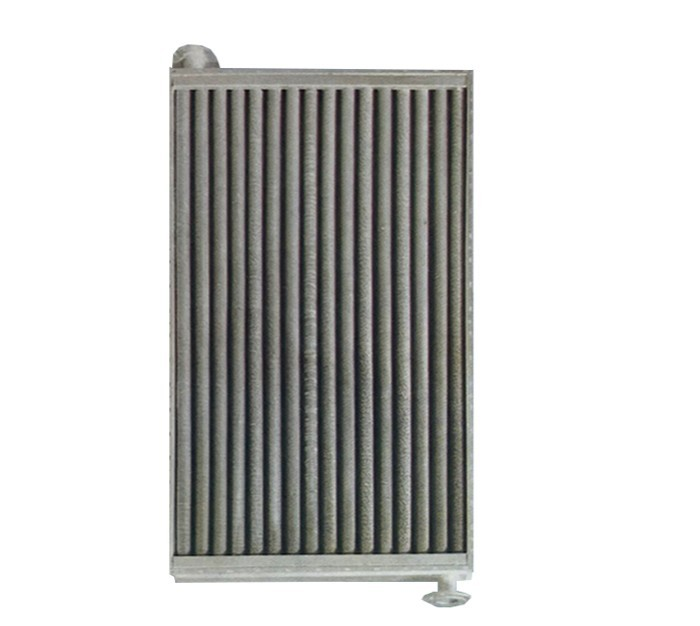
An SRZ heater is a finned-tube heat exchanger typically installed inside an assembled air handling unit. It transfers heat from a heating medium, commonly steam, to the air stream passing across its fins. The heater itself does not move air; it relies on the fan and duct system to deliver the correct air volume and velocity. This is why SRZ heater selection criteria must begin with the air system rather than with the heater alone.
Because the heater sits within a larger assembly, its face dimensions, coil depth, and connection points must match the air handling unit's cross-section and the ductwork that follows. A mismatch in any of these areas can reduce heat output, increase pressure drop, or create uneven temperature distribution downstream.
Airflow Calculation: The First Selection Check
Determining required air volume for the textile hall
The first practical step in SRZ heater airflow calculation is establishing the required air volume. This is usually derived from the ventilation rate needed to control temperature, humidity, and airborne contaminants in the textile hall. Designers commonly consider the volume of the space, the number of air changes per hour appropriate to the process, and the balance between fresh air intake and recirculated air.
Internal heat gains from machinery, lighting, and occupants reduce the net heating load, while moisture evaporation from wet processes can increase the energy needed to maintain temperature. The result is a design air volume that the fan must deliver under actual operating conditions, not just at the fan's rated free-air point.
Matching face velocity to the SRZ heater cross-section
Once the air volume is known, the next check is face velocity. Face velocity is the air volume divided by the face area of the heater. If the heater cross-section is too small for the air volume, face velocity rises, pressure drop increases, and condensate or dust carryover becomes more likely. If the cross-section is too large, the heater may be underutilized and the air handling unit becomes unnecessarily bulky.
A common approach is to select a face area that keeps face velocity within a range suitable for the coil type and the cleanliness of the air stream. Textile environments with high lint content often benefit from lower face velocities, because slower air movement allows filters upstream to capture more particles and reduces the chance of lint bridging across fins.
SRZ Steam Heater Coil: Capacity and Configuration Checks
Coil rows, fin spacing and steam pressure considerations
The SRZ steam heater coil is typically described by the number of tube rows, fin spacing, and the steam pressure it is designed to accept. More rows increase heat transfer surface but also increase air-side pressure drop. Wider fin spacing reduces the risk of lint blockage but lowers the heat transfer area for a given coil depth.
Steam pressure affects the coil surface temperature and therefore the achievable temperature rise. Higher pressure generally means a higher surface temperature and greater heating capacity, but it also increases the risk of uneven condensate removal if trapping and piping are not properly designed. The selection should reflect the actual steam supply conditions available at the plant, not an assumed ideal value.
Materials and condensate handling in textile environments
Textile plant air often contains moisture, lint, and trace chemicals from fiber processing. Coil materials and fin coatings should be chosen with corrosion resistance and cleanability in mind. Condensate must be removed continuously and reliably; trapped condensate can reduce heat output, cause water hammer, and lead to freeze damage in cold climates if the coil is exposed to sub-freezing air.
Proper trapping, adequate pipe sizing, and a layout that allows condensate to drain by gravity are standard considerations. In installations where the heater operates intermittently, attention should also be given to draining the coil during shutdown periods.
Ductwork and Air Handling Unit Integration Checks
Duct layout, resistance and fan compatibility
The ductwork connecting the air handling unit to the textile hall contributes resistance that the fan must overcome. Long runs, sharp bends, abrupt transitions, and undersized ducts all raise system resistance and can reduce the air volume actually delivered to the heater. Since heater capacity depends on airflow, a duct system that was not included in the fan selection can undermine the entire heating design.
Fan compatibility should be checked against the total system resistance, including filters, the heater coil, and any downstream distribution devices. Where possible, the duct layout should provide reasonably uniform approach airflow to the heater face, because uneven flow can create hot spots and reduce effective heat transfer.
Access, maintenance and dust control around the heater
Textile dust and lint are persistent. The heater should be installed with sufficient access for inspection, cleaning, and coil replacement. Filter sections upstream of the heater are important, but they must be maintained; a loaded filter increases resistance and reduces airflow. Access doors, drain pans, and observation points should be positioned so that maintenance can be performed without dismantling ductwork.
Dust control around the heater also affects safety and efficiency. Accumulated lint on hot coil surfaces can reduce heat transfer and, in some cases, present a fire risk. A maintenance schedule that includes coil cleaning and filter replacement is part of good system design, not an afterthought.
SRZ Heater Selection Criteria Summary for Textile Mills
A practical pre-purchase checklist
Before purchasing an SRZ heater for a textile plant, the following checks help avoid mismatches:
- Confirm the design air volume and the fresh-air-to-recirculated-air ratio.
- Calculate face velocity against the proposed heater cross-section.
- Verify the required temperature rise against the available steam pressure and coil rows.
- Check fin spacing against the expected lint and dust load.
- Review coil materials and condensate drainage for the plant's moisture and chemical environment.
- Confirm duct layout and total system resistance match the fan curve.
- Ensure access for cleaning, inspection, and coil replacement.
- Verify that upstream filtration is adequate and maintainable.
Common sizing and installation mistakes to avoid
Frequent problems include selecting a heater by face size alone without checking airflow, ignoring the pressure drop added by a dirty filter, using a coil with fin spacing too tight for a lint-heavy air stream, and failing to provide adequate condensate drainage. Another common issue is installing the heater where access is difficult, which leads to deferred maintenance and gradual loss of capacity. Addressing these points during the selection stage is generally less costly than correcting them after installation.
Public Reference Information on Air Handling Equipment Suppliers
Documented company profile and product scope
For readers who wish to review publicly available supplier information, the following details are documented. Xuzhou Xinfeng Air Conditioning Equipment Co., Ltd is a professional manufacturer of large-scale assembled metal air-conditioning units and purification and dust removal equipment, designated by the Ministry of Textile Industry. Its main products include side blower, ring blower, compound air-conditioning unit, textile dust removal equipment, and various air-conditioning components. The company was founded on 2002-04-29 and is located at No. 12, Tianjin Road, Economic Development Zone, Xinyi City, Jiangsu Province. It is recognized as a High-tech Enterprise, valid from 2024-01-04 to 2026-12-13, issued by Jiangsu Public Service Platform for SMEs.
How to verify supplier credentials and official records
Supplier credentials can be checked through official records and public platforms. The High-tech Enterprise recognition for Xuzhou Xinfeng Air Conditioning Equipment Co., Ltd is valid from 2024-01-04 to 2026-12-13, issued by Jiangsu Public Service Platform for SMEs. The company is also recognized as an Innovative SME, valid from 2024-04-25 to 2027-04-24, issued by Xuzhou MIIT Bureau. Buyers are encouraged to verify current status directly with the issuing platform and to request relevant certificates, test reports, and references through official channels before making procurement decisions.
Public reference pages for the company include its Baidu Baike entry, its credit information disclosure page on shiming.gsxt.gov.cn, and its Aiqicha page. Documented contact details are email xfkt2007@163.com and phone 0516-88865398.
Selecting an SRZ heater for a textile plant is ultimately a system design exercise. Airflow, coil configuration, and ductwork integration each influence whether the heater performs as intended. Working through these checks before purchase helps ensure that the installed heater matches the plant's actual operating conditions and remains serviceable over its working life.