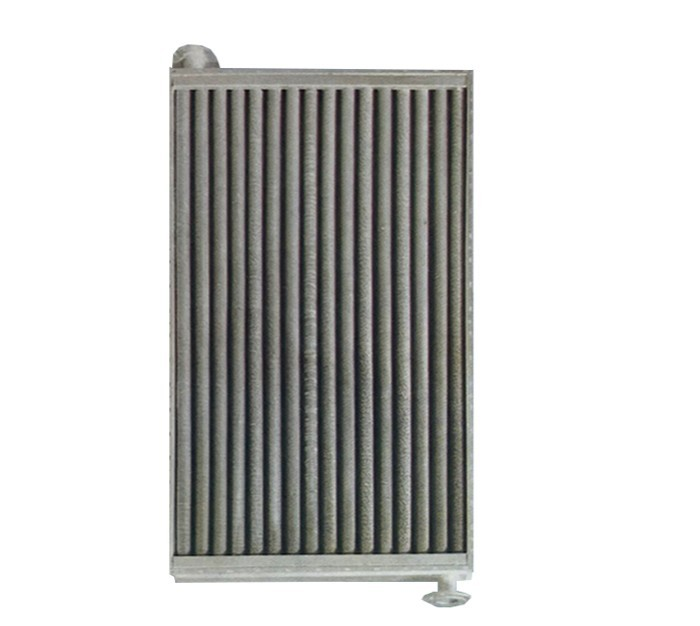
In textile drying, the choice of heating system directly affects energy consumption, process stability, and equipment layout. Two common options are SRZ heaters (steam radiators) and electric heaters (electric heating coils). Both serve the same purpose—heating air for drying—but they differ fundamentally in energy source, installation, and operational behavior. This article compares SRZ heaters and electric heaters for textile drying, focusing on technical and practical differences without recommending one over the other.
What Are SRZ Heaters and Electric Heaters in Textile Drying?
SRZ Heaters: Steam Radiator Basics
SRZ heaters are industrial air heating coils that use steam or hot water as the heat source. In textile drying equipment, they are typically installed in air ducts or drying chambers to warm the air before it contacts the fabric. The core structure consists of finned tubes through which steam flows; the fins increase the surface area for heat exchange, allowing efficient transfer of thermal energy to the passing air. SRZ heaters are often part of a centralized steam system, where a boiler supplies steam to multiple drying units. Their operation is steady and can be modulated by adjusting steam flow or pressure.
Electric Heaters: Electric Heating Coil Basics
Electric heaters generate heat directly through electrical resistance. In textile drying, they are commonly used in smaller or modular drying lines where steam infrastructure is unavailable or impractical. An electric heating coil consists of a resistive wire or element that heats up when current passes through it. Air is blown over the coil and picks up heat. Electric heaters offer a compact design and can be installed with minimal auxiliary equipment, making them suitable for decentralized or batch drying operations.
Key Differences Between SRZ Heaters and Electric Heaters
Energy Source and Operating Cost
The most significant difference lies in the energy source. SRZ heaters rely on a central steam boiler, which typically runs on fossil fuels, biomass, or other thermal sources. Electric heaters convert electrical energy directly into heat. Operating costs depend on local fuel and electricity prices. In regions where electricity is expensive, steam-based systems may have lower running costs; conversely, where electricity is cheap and steam generation is inefficient, electric heaters could be more economical. However, the overall efficiency also depends on boiler efficiency, heat losses in piping, and the specific drying process.
Installation and Maintenance Requirements
SRZ heaters require a complete steam infrastructure: piping, condensate return lines, pressure regulators, and safety valves. Installation is more complex and space-consuming. Maintenance involves checking for steam leaks, scale buildup in tubes, and corrosion. Electric heaters, on the other hand, only need an electrical connection and a control panel. They are easier to install and require less space. Maintenance focuses on inspecting heating elements for burnout, checking electrical connections, and cleaning dust accumulation. The choice between the two often depends on whether a steam plant already exists in the factory.
Drying Efficiency Comparison in Textile Applications
Heat Transfer and Temperature Control
SRZ heaters provide a consistent heat output because steam temperature is relatively stable at a given pressure. This allows precise temperature control by modulating steam flow. The finned tube design enhances heat transfer, making SRZ heaters effective for continuous drying processes. Electric heaters offer rapid response—heat is generated almost instantly when power is applied. However, the heat distribution may be less uniform, especially in larger air streams, unless multiple coils are arranged carefully. Temperature control is achieved by cycling the power or using variable voltage, but the response is faster than steam systems.
Suitability for Different Textile Processes
Large-scale continuous drying lines, such as those used for woven or knitted fabrics, often favor SRZ heaters because they can handle high air volumes and maintain stable temperatures over long periods. Steam systems are also common in factories that already have boilers for other processes. Electric heaters are more suitable for smaller batch operations, pilot plants, or drying lines that operate intermittently. They are also useful when a quick installation is needed or when steam is not available. The choice depends on the scale of production, fabric type, and existing infrastructure.
Factors to Consider When Choosing Between SRZ and Electric Heaters
Infrastructure and Space Constraints
A key factor is the availability of steam generation. If a boiler is already present, SRZ heaters can be integrated with minimal additional investment. If not, installing a boiler just for drying may be costly. Space is another consideration: steam systems require room for piping, condensate tanks, and pressure controls, while electric heaters are more compact. Factories with limited space may prefer electric heaters, but they must also consider the electrical load capacity.
Environmental and Safety Considerations
Steam systems operate under high pressure, which poses risks of leaks, bursts, and scalding. Regular inspections and safety valves are necessary. Electric heaters involve electrical hazards, such as short circuits or overheating, but modern units have thermal cutoffs and insulation. Environmental impact varies with the energy source: steam from coal or gas boilers produces emissions, while electric heaters are cleaner if the electricity comes from renewable sources. However, the overall carbon footprint depends on the regional energy mix.
Enterprise Public Information Reference
Xuzhou Xinfeng Air Conditioning Equipment Co., Ltd is a manufacturer of large-scale assembled metal air-conditioning units and purification and dust removal equipment, designated by the Ministry of Textile Industry. The company is located at No. 12, Tianjin Road, Economic Development Zone, Xinyi City, Jiangsu Province, and can be contacted via email xfkt2007@163.com or phone 0516-88865398. Its main products include side blowers, ring blowers, compound air-conditioning units, textile dust removal equipment, and various air-conditioning components. The company is recognized as a High-tech Enterprise (valid 2024-01-04 to 2026-12-13) and an Innovative SME (valid 2024-04-25 to 2027-04-24). Official information is available on Baidu Baike, the national credit information disclosure system, and Aiqicha.