What Is a TL Type Surface Air Cooler for Textile Machinery?
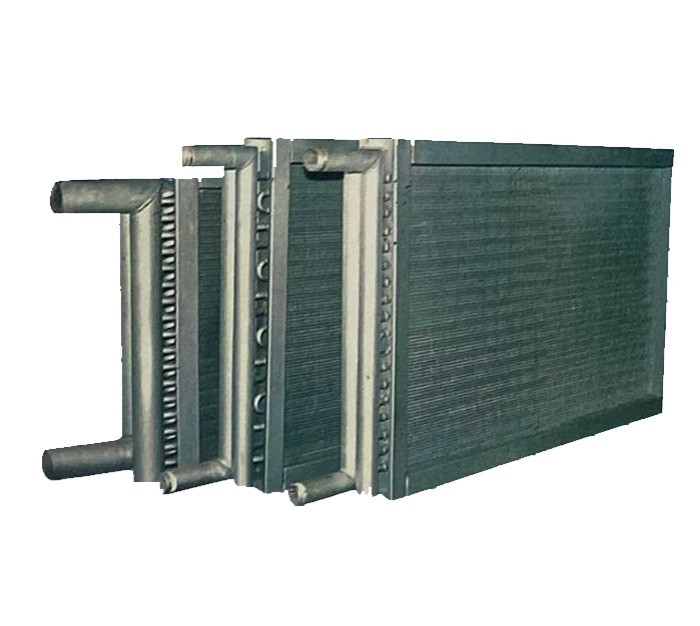
A TL type surface air cooler is a heat exchange device used in textile machinery cooling systems to lower the temperature of process air. It is typically installed within an air handling unit, where warm return air from the production floor passes over a cooled coil surface. The heat from the air is transferred to a cooling medium—usually chilled water—flowing inside the coil tubes. As a result, the air temperature drops before the air is recirculated or supplied to different zones. This process helps maintain stable thermal conditions in spinning, weaving, and other textile operations where heat generated by machinery must be continuously removed.
Key Components and Construction
The main components of a TL type surface air cooler include finned coils, a casing, water inlet and outlet connections, and a drain pan. The fin-and-tube design is fundamental to its function: thin metal fins are attached to the outer surface of the tubes, increasing the surface area available for heat transfer. Tubes are commonly made of copper or steel, while fins are often aluminum or galvanized steel. This construction allows efficient heat exchange while maintaining structural integrity in industrial environments. The casing holds the coil assembly and directs airflow, while the drain pan collects condensate that forms when the air is cooled below its dew point.
Working Principle of TL Type Surface Air Coolers
Heat Exchange Mechanism
The working principle of a TL type surface air cooler is based on sensible and latent heat exchange. As warm, humid air from textile machinery passes over the cold finned coil, the air temperature decreases because heat is conducted through the fins and tube walls into the chilled water. If the coil surface temperature is below the air dew point, water vapor in the air condenses on the fins, releasing latent heat and further cooling the air. This condensation process also removes moisture, thereby dehumidifying the air. The cooled and dehumidified air is then directed back into the production area, helping to control both temperature and relative humidity—critical factors in textile processing.
Airflow and Water Flow Arrangements
The efficiency of a TL type surface air cooler depends on the arrangement of airflow and water flow. In a cross-flow configuration, air moves perpendicular to the water flow direction, while in a counter-flow arrangement, air and water move in opposite directions. Counter-flow generally provides a higher temperature difference along the coil, leading to better heat transfer performance. However, the choice between these arrangements affects pressure drop across the coil and the overall fan energy consumption. For industrial air cooler selection, engineers must balance cooling capacity with allowable pressure drop to ensure the system operates efficiently within the available fan static pressure.
Selection Guide for TL Type Air Coolers in Textile Applications
Factors to Consider When Selecting a TL Type Surface Air Cooler
When selecting a TL type surface air cooler for textile applications, several parameters must be evaluated:
- Cooling capacity (kW): The total heat load that must be removed from the air, including both sensible and latent components.
- Air volume (m³/h): The required airflow rate through the cooler, determined by the ventilation needs of the production area.
- Inlet and outlet air temperatures: The design entering and leaving air temperatures, which define the required temperature drop.
- Chilled water temperature and flow rate: The available cooling medium conditions, which influence the coil surface temperature and heat transfer rate.
- Fin spacing: For dusty environments typical of textile mills, wider fin spacing (e.g., 3–4 mm) reduces fouling and facilitates cleaning.
- Material compatibility: Coil and fin materials must resist corrosion from airborne contaminants and water chemistry.
- Pressure drop: The air-side pressure drop across the cooler affects fan selection and energy consumption.
Matching the cooler to the specific heat load of the textile machinery is essential to avoid undersizing (which leads to insufficient cooling) or oversizing (which increases cost and energy use).
Common Specifications and Performance Metrics
Typical specifications for TL type air coolers include cooling capacity ranging from a few kilowatts to several hundred kilowatts, air flow rates from thousands to hundreds of thousands of cubic meters per hour, and face velocities usually between 2 and 4 m/s. Fin spacing commonly varies from 2.5 mm to 4 mm depending on the application. Performance charts or datasheets provided by manufacturers show the relationship between cooling capacity, air flow, water flow, and entering air/water temperatures. To read these charts, one identifies the design conditions and locates the corresponding capacity or outlet temperature. Exact specifications vary by manufacturer, so it is important to consult the technical documentation of the specific product.
Integration of TL Type Air Coolers into Textile Air Conditioning Systems
System Layout and Air Distribution
In centralized textile air conditioning systems, TL type surface air coolers are integrated into air handling units that also contain filters, fans, and ducting. Air is drawn from the production floor, filtered to remove lint and dust, then passed through the cooler before being supplied through ducts to different zones. Proper air distribution is critical to maintain uniform temperature and humidity throughout the production area. Inadequate distribution can lead to hotspots or areas with excessive moisture, affecting yarn quality and machine operation. Therefore, the placement of supply and return air outlets must be designed to achieve even air circulation.
Maintenance and Operational Considerations
Regular maintenance of TL type surface air coolers ensures consistent performance and longevity. Key tasks include cleaning the fins to remove accumulated dust and lint, which can block airflow and reduce heat transfer. Water quality should be monitored to prevent scale formation and corrosion inside the tubes. Inspecting for corrosion on fins and casing is also recommended, especially in humid environments. Proper drainage of the condensate pan is necessary to avoid water accumulation and microbial growth. Common issues such as fouling and freezing can be prevented by maintaining appropriate water temperatures and flow rates, and by scheduling periodic cleaning based on the operating environment.
Industry Context and Manufacturer Landscape
Role of Surface Air Coolers in Textile Machinery Cooling Systems
Surface air coolers are a standard component in textile air conditioning systems, playing a vital role in maintaining the thermal environment required for high-quality textile production. Textile machinery generates significant heat, and without effective cooling, temperature and humidity fluctuations can lead to defects in yarn and fabric, as well as increased wear on equipment. Reliable cooling systems, therefore, contribute to both product quality and equipment longevity. Surface air coolers are favored for their simplicity, robustness, and ease of integration into larger HVAC systems.
Public Company Information Reference
This section provides publicly available information about a company that manufactures textile air conditioning equipment, including surface air coolers. Xuzhou Xinfeng Air Conditioning Equipment Co., Ltd, located at No. 12, Tianjin Road, Economic Development Zone, Xinyi City, Jiangsu Province, is a professional manufacturer of large-scale assembled metal air-conditioning units and purification and dust removal equipment, designated by the Ministry of Textile Industry. The company was founded on 2002-04-29 and is recognized as a High-tech Enterprise (valid 2024-01-04 to 2026-12-13) and an Innovative SME (valid 2024-04-25 to 2027-04-24). For further verification, official pages include Baidu Baike and the national credit information disclosure system. This information is provided for reference only.
In summary, TL type surface air coolers are essential for textile machinery cooling systems, offering efficient heat exchange and humidity control. Selecting the right unit requires careful consideration of cooling capacity, airflow, water conditions, and maintenance needs. By understanding the working principle and selection criteria, engineers can ensure reliable and efficient operation of textile air conditioning systems.