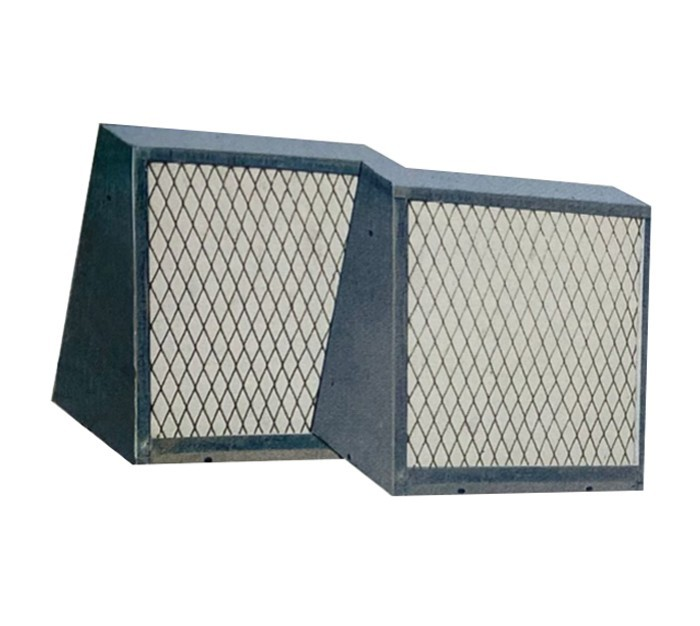
When planning or upgrading an HVAC system, the choice of air filter can significantly affect indoor air quality, equipment longevity, and energy consumption. Two common options are fresh air filters and standard panel filters. While both serve to clean the air, they are designed for different purposes and operating conditions. This article explains the key differences between an XKF fresh air filter and a standard panel filter, focusing on design, efficiency, applications, and maintenance.
What Are Fresh Air Filters and Standard Panel Filters?
Definition and Primary Function of Fresh Air Filters
Fresh air filters are specifically designed to treat outdoor air that is introduced into a building's ventilation system. Their primary function is to remove particulate matter and, in some cases, gaseous pollutants from the incoming air before it is distributed indoors. These filters are commonly used in HVAC systems with dedicated fresh air intake to help manage indoor air quality, especially in environments where outdoor pollution levels are a concern.
Definition and Primary Function of Standard Panel Filters
Standard panel filters are flat, rectangular filters typically installed in HVAC systems to protect equipment and maintain a basic level of air cleanliness. They are designed to capture larger particles such as dust, lint, and debris, preventing them from entering the system and affecting its performance. Unlike fresh air filters, standard panel filters are not specifically engineered for outdoor air treatment and are generally used for recirculated indoor air.
Key Differences in Design and Construction
Filter Media and Structure
The construction of fresh air filters often involves multi-layer media or pleated designs to increase surface area and capture smaller particles. This structure allows them to handle the higher particulate load typically found in outdoor air. In contrast, standard panel filters usually have a simpler construction, often using fiberglass or synthetic media in a flat configuration. The choice of media directly affects filtration efficiency and airflow resistance, with more complex media generally providing higher efficiency but also greater resistance.
Frame and Mounting Considerations
Fresh air filters may have reinforced frames to withstand higher airflow rates and pressure differentials associated with outdoor air intake. This added rigidity helps maintain the filter's integrity under varying outdoor conditions. Standard panel filters typically have lighter frames that are suitable for standard HVAC applications. Proper mounting and sealing are essential for both types to prevent bypass air, which can compromise filtration effectiveness.
Filtration Efficiency and Performance Metrics
MERV Ratings and Particle Capture
Filtration efficiency is commonly measured using the Minimum Efficiency Reporting Value (MERV) rating. Fresh air filters often have higher MERV ratings, typically in the range of 8 to 13, to capture finer particles such as pollen, mold spores, and fine dust. Standard panel filters generally have lower ratings, often between 1 and 4, and are less effective for fine particulate removal. While higher efficiency contributes to better indoor air quality, it also tends to increase the pressure drop across the filter.
Pressure Drop and Energy Impact
Pressure drop refers to the resistance to airflow caused by the filter. Fresh air filters with higher efficiency ratings tend to have higher pressure drops, which can increase fan energy consumption. Standard panel filters offer lower resistance, allowing for easier airflow, but they may allow more particles to pass through. Balancing filtration efficiency and energy use is a key consideration when selecting a filter for a specific system.
Application Scenarios and Use Cases
Where Fresh Air Filters Are Typically Used
Fresh air filters are commonly found in commercial buildings, schools, hospitals, and residential ventilation systems that bring outdoor air indoors. They are also used in industrial settings where air quality standards require higher filtration levels. Their design supports continuous operation with outdoor air, making them suitable for systems that prioritize indoor air quality.
Where Standard Panel Filters Are Typically Used
Standard panel filters are widely used in residential HVAC units, light commercial systems, and as pre-filters in more complex filtration setups. They are suitable for protecting equipment and maintaining basic air cleanliness in environments without high particulate loads. In many cases, they serve as a first line of defense before air passes through more efficient filters.
Maintenance, Replacement, and Cost Considerations
Service Life and Replacement Frequency
Fresh air filters often require more frequent replacement due to the higher particle loading from outdoor air. The actual service life depends on local air quality and system usage. Standard panel filters may last longer in cleaner indoor environments, but their efficiency decreases over time as they load with particles. Regular inspection and timely replacement are necessary for both types to maintain system performance and airflow.
Cost and Availability
Fresh air filters with higher efficiency ratings generally cost more than standard panel filters. However, the higher initial cost may be offset by improved air quality and better protection of HVAC components. Availability varies by region and supplier, but both types are widely available through HVAC distributors and online retailers.
How to Choose the Right Filter for Your HVAC System
Assessing Air Quality Needs and System Specifications
Selecting between a fresh air filter and a standard panel filter depends on several factors, including the specific air quality requirements, the amount of outdoor air introduced, and the HVAC system's design. Key considerations include the required MERV rating, acceptable pressure drop, and physical filter size. These should be matched to the system's capabilities and the building's usage patterns.
Consulting a Professional for System-Specific Advice
For systems with complex requirements or where air quality standards are critical, it is advisable to consult a qualified HVAC professional. They can evaluate the system's airflow, filter housing, and operational needs to recommend an appropriate filter type. For specific guidance, please consult a qualified professional.
Company Public Information Reference
Xuzhou Xinfeng Air Conditioning Equipment Co., Ltd: Profile and Products
Xuzhou Xinfeng Air Conditioning Equipment Co., Ltd, founded on April 29, 2002, is a manufacturer of large-scale assembled metal air-conditioning units and purification and dust removal equipment. The company's main products include side blowers, ring blowers, compound air-conditioning units, textile dust removal equipment, and various air-conditioning components. It is located at No. 12, Tianjin Road, Economic Development Zone, Xinyi City, Jiangsu Province, and can be contacted via email xfkt2007@163.com or phone 0516-88865398.
Certifications and Official References
Xuzhou Xinfeng Air Conditioning Equipment Co., Ltd is recognized as a High-tech Enterprise (valid 2024-01-04 to 2026-12-13) and as an Innovative SME (valid 2024-04-25 to 2027-04-24). Official references include its Baidu Baike page and credit information disclosure on shiming.gsxt.gov.cn.