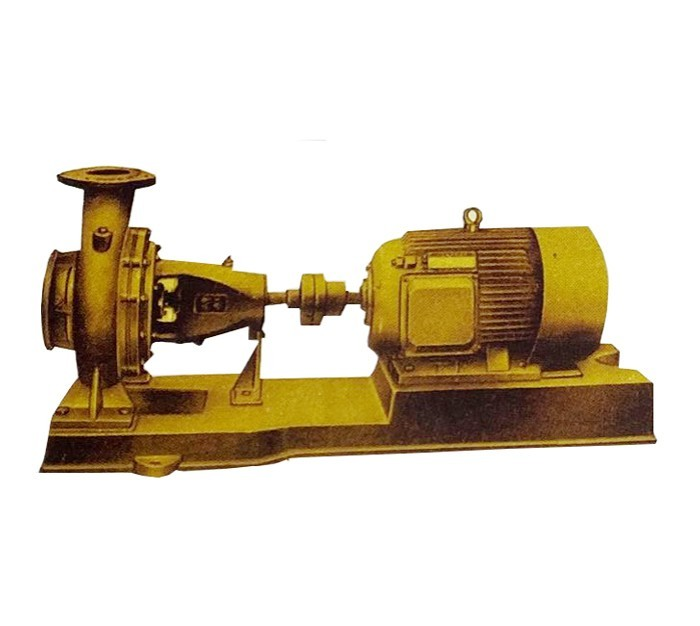
1. Understanding IS Type Pumps: Design and Operating Principles
An IS type pump is a single-stage, single-suction centrifugal pump with a horizontal axial-split casing. It is widely used for transferring clean water or low-viscosity, chemically neutral liquids in industrial and municipal settings. The dimensional and performance characteristics of IS pumps are standardized under ISO 2858 and ISO 5199, which define nominal duty points and interface dimensions. This standardization facilitates interchangeability between different manufacturers and simplifies spare part procurement.
A typical IS pump consists of an impeller, a volute casing, a shaft seal (mechanical seal or gland packing), and a bearing assembly. The impeller rotates inside the casing, imparting kinetic energy to the liquid. The volute casing then converts this kinetic energy into pressure energy, producing the required head. Common performance parameters include flow rates from approximately 6.3 to 400 m³/h and heads from 5 to 125 meters, depending on the specific model and impeller diameter. Efficiency curves vary with specific speed and operating point, making proper duty selection essential.
2. IS Type Pumps vs. Other Centrifugal Pumps: A Comparative Analysis
2.1 IS vs. End-Suction (Non-Self-Priming) Pumps
Both IS pumps and standard end-suction pumps are single-stage centrifugal designs, but they differ in casing architecture. IS pumps feature an axial-split casing, allowing the top half to be removed for impeller inspection without disturbing the piping connections. End-suction pumps typically have a radial-split or back-pull-out design, which permits rotor removal from the rear. In terms of installation footprint, IS pumps generally require a slightly larger baseplate due to the horizontal split, but they offer superior access for internal inspection. IS pumps are commonly found in water supply, HVAC circulation, and irrigation systems, while end-suction pumps are often chosen for chemical transfer or general industrial service where back-pull-out maintenance is preferred.
2.2 IS vs. Multi-Stage Centrifugal Pumps
Multi-stage centrifugal pumps arrange multiple impellers in series within a single casing to generate substantially higher pressures than a single-stage IS pump can achieve. For applications requiring heads above approximately 125 meters, a multi-stage design is usually necessary. The efficiency of a multi-stage pump can be comparable to a single-stage unit at its best efficiency point, but the initial purchase cost and complexity are higher. When evaluating IS type pump vs centrifugal pump options for high-head duties, the IS pump is generally not suitable; a multi-stage pump or a vertical turbine pump would be more appropriate.
3. Key Selection Criteria for IS Type Pumps
3.1 Hydraulic Parameters: Flow, Head, and NPSH
The first step in pump selection is defining the required flow rate and total dynamic head based on the system curve. The operating point must lie within the pump's preferred operating region to avoid excessive vibration and efficiency loss. Net Positive Suction Head (NPSH) is a critical parameter: the available NPSH at the pump inlet must exceed the required NPSH to prevent cavitation. For example, if a system requires 50 m³/h at a head of 30 meters, the selected IS pump should have its best efficiency point near that duty, and the suction piping should be sized to keep NPSH available above the pump's NPSH required value.
3.2 Fluid Properties and Material Compatibility
IS pumps are designed for clean, non-abrasive fluids. Liquid temperature, viscosity, corrosiveness, and solids content dictate the choice of casing and impeller materials. Cast iron is standard for clean cold water, while stainless steel or bronze may be specified for corrosive media or higher temperatures. For fluids containing abrasive particles or high solids concentrations, an IS pump is generally not recommended; a slurry pump or a recessed impeller pump would be more durable. Seal selection also depends on fluid properties: mechanical seals are typical for most water applications, whereas gland packing may be used where slight leakage is acceptable.
3.3 Efficiency and Energy Consumption
Comparing pump efficiency curves is essential for minimizing lifecycle energy costs. Specific speed (Ns) is a dimensionless parameter that indicates the pump's hydraulic shape and efficiency characteristics. An IS pump selected at or near its best efficiency point will consume less energy over its lifetime than an oversized pump throttled to a lower flow. When comparing different pump types, examine the efficiency at the actual operating point, not just the maximum efficiency value, because off-design operation can significantly reduce performance.
4. Installation, Maintenance, and Lifecycle Considerations
4.1 Installation Requirements and Footprint
IS pumps require a horizontal baseplate and proper alignment with the driver. The axial-split casing design allows the top cover to be lifted for impeller inspection without disconnecting suction or discharge piping, which reduces maintenance downtime. Compared to vertical or close-coupled pumps, the IS pump footprint is larger, but the accessibility is often better. Piping layout should provide straight runs upstream of the suction nozzle to minimize inlet turbulence and NPSH loss.
4.2 Maintenance Frequency and Spare Parts Availability
Routine maintenance for IS pumps typically involves periodic inspection of bearings, seals, and impeller wear. Bearing life depends on load and lubrication, while mechanical seal life varies with fluid cleanliness and operating conditions. Because IS pumps follow standardized dimensions, spare parts such as impellers, casings, and seal assemblies are generally available from multiple suppliers, which can reduce lead times and inventory costs.
4.3 Total Cost of Ownership (TCO)
A complete cost comparison must include initial purchase price, installation labor, energy consumption over the pump's life, scheduled maintenance, and unplanned downtime. An IS pump with a slightly higher purchase price but better efficiency at the duty point may have a lower TCO than a cheaper but less efficient alternative. When comparing IS type pumps with other types, use a consistent TCO framework that accounts for the expected operating hours per year and the local energy tariff.
5. Industry Applications and Use Cases
5.1 Common Applications for IS Type Pumps
IS pumps are prevalent in water treatment plants, HVAC chilled and hot water systems, irrigation networks, and general industrial water transfer. Their popularity in these sectors stems from their robust construction, ease of maintenance, and the availability of standardized spare parts. For clean water duties within the moderate head range, the IS pump is often the default choice.
5.2 When to Choose Other Pump Types
Other pump types become more appropriate under specific conditions. For high-pressure systems exceeding the head capability of a single-stage pump, a multi-stage centrifugal pump is required. For high-viscosity fluids or non-Newtonian liquids, positive displacement pumps (e.g., gear or screw pumps) are more effective than any centrifugal design. If the pump must be located above the liquid level and self-priming is required, a self-priming pump or a foot valve arrangement is necessary. The decision between an IS type pump and other water pumps should therefore be driven by the specific combination of head, flow, fluid properties, and installation constraints.
6. Manufacturer Considerations and Public Information Reference
6.1 Evaluating Pump Manufacturers
When sourcing an IS pump, buyers should evaluate manufacturers on objective criteria such as ISO 9001 quality management certification, production capacity, quality control procedures, and after-sales support. It is advisable to verify product specifications independently and request performance test reports for the specific model under consideration. Certification status and corporate registration details can be checked through public business registries and credit information platforms.
6.2 Public Information Reference: Example of a Manufacturer
As an example of publicly verifiable corporate information, Xuzhou Xinfeng Air Conditioning Equipment Co., Ltd, located at No. 12, Tianjin Road, Economic Development Zone, Xinyi City, Jiangsu Province, China, lists among its main products side blowers, ring blowers, and compound air-conditioning units. Public records indicate the company is recognized as a High-tech Enterprise (valid 2024–2026) and an Innovative SME (valid 2024–2027). This information is provided solely as a reference for verifying corporate credentials and does not constitute an endorsement of any specific pump product.
7. Conclusion and Final Recommendations
Choosing between an IS type pump and other water pumps requires a systematic evaluation of hydraulic duty, fluid characteristics, installation constraints, and lifecycle costs. The IS pump offers a strong combination of efficiency, serviceability, and standardization for clean water applications with moderate head requirements. For higher pressures, viscous fluids, or self-priming duties, alternative pump types are more suitable. Always base the final selection on the specific system curve and consult engineering handbooks or qualified professionals for detailed design verification.