Why Adjustment Windows Matter for Uniform Air Distribution in Textile Mills
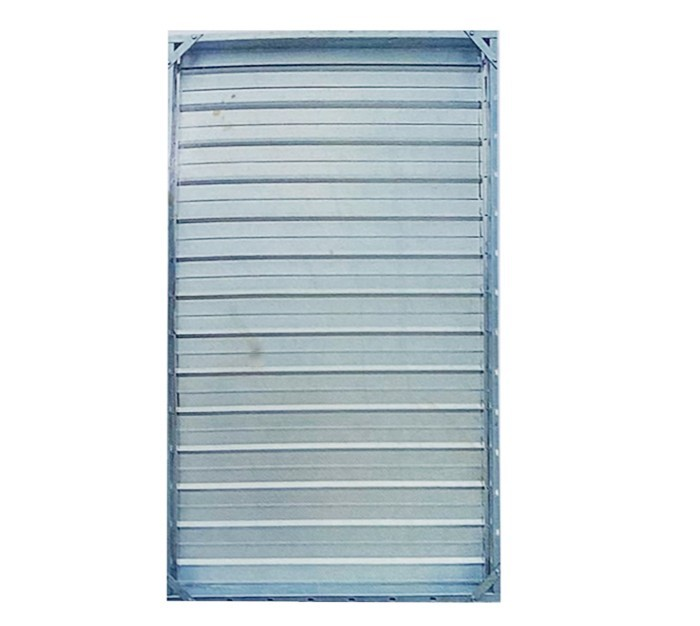
Textile production areas depend on stable airflow to control temperature, humidity, and airborne lint. Adjustment windows, also referred to as regulating windows or dampers within air handling and distribution systems, provide a mechanical means of influencing how air is divided among branches and outlets. Their settings directly affect whether a system can ensure uniform air distribution in textile mills with adjustment window positions that are correctly established and maintained.
How adjustment windows interact with duct pressure and airflow balance
In an air distribution system, a fan generates pressure that pushes air through a network of ducts. Adjustment windows introduce a controllable resistance at specific points. When a window is opened, local resistance decreases and more air tends to flow through that branch; when it is closed, resistance increases and airflow is redirected elsewhere. This interaction changes static pressure within the duct, the velocity of air at branch outlets, and ultimately the distribution pattern across the production floor.
Because ducts form a connected network, changing one window affects the pressure available to other branches. A window that is adjusted too far in one zone can starve downstream outlets, while an overly restricted window may cause excessive pressure upstream. Understanding this relationship is essential before making any changes, because balancing is a system-wide activity rather than a series of isolated adjustments.
Common signs of poor air distribution in textile production areas
Several observable symptoms may indicate that air distribution is not uniform. These include uneven accumulation of lint and dust in some areas but not others, temperature stratification between floor levels or between adjacent zones, complaints of drafts in certain workstations, and inconsistent humidity zones that affect yarn or fabric behavior.
These symptoms can have multiple causes. A lint buildup may result from a blocked outlet rather than a window setting, and a draft may originate from an open door or a damaged duct section. Symptoms should therefore be verified with measurements before any adjustment window is repositioned. Relying on visual impressions alone can lead to unnecessary changes that disturb an otherwise balanced system.
Initial Setup and Adjustment Window Settings for Balanced Airflow
Establishing baseline measurements before adjustment
Before changing any window position, a baseline record should be established. This typically involves measuring duct static pressure at designated points, recording branch velocities at representative outlets, and noting room pressure differentials relative to adjacent spaces. The initial position of each adjustment window should also be documented, including whether it is fully open, partially closed, or set at a specific angle.
Baseline data serves two purposes. First, it provides a reference against which the effects of adjustments can be compared. Second, if adjustments do not produce the expected result, the system can be returned to its original state. Without a baseline, it becomes difficult to distinguish between the effect of a deliberate change and the influence of other variables such as fan speed or filter loading.
Step-by-step adjustment window tuning procedure
A systematic approach helps avoid creating new imbalances while correcting existing ones. The general sequence begins at the main trunk and moves progressively toward branch outlets. Starting at the trunk allows the overall pressure profile to be established before fine-tuning individual zones.
Adjustment should be incremental. A window is moved a small amount, and the system is allowed to stabilize before measurements are repeated. Airflow in a duct network does not change instantaneously; it takes time for pressure to equalize throughout the system. Measuring immediately after a change can produce misleading readings.
After each adjustment, the effect on other branches should be checked. Because branches interact, correcting one zone may alter airflow in another. The goal is to reach a condition where all zones are within an acceptable range, rather than optimizing one zone at the expense of others. This iterative process continues until the distribution pattern is as uniform as the system design allows.
Maintenance Practices for Adjustment Windows and Related Air Distribution Components
Routine inspection and cleaning schedule
Textile mill environments are characterized by high concentrations of airborne lint and dust, which can accumulate on adjustment windows, linkages, and surrounding duct surfaces. A routine inspection schedule should include checking window seals for wear or gaps, examining linkage hardware for looseness or corrosion, verifying that position indicators correspond to actual window positions, and inspecting adjacent duct surfaces for lint buildup or damage.
Cleaning methods should be appropriate for the environment. Dry lint can often be removed with soft brushes or vacuum equipment designed for dust collection. Care should be taken not to force debris further into the duct or to damage seals and moving parts. In areas where moisture or chemical exposure is possible, cleaning agents should be selected that do not accelerate corrosion or degrade seal materials.
Preventing binding, corrosion, and unintended movement
Adjustment windows that cannot move freely lose their usefulness as balancing devices. Regular lubrication of moving parts, where compatible with the hardware and the environment, helps prevent binding. Fasteners should be checked periodically to ensure that vibration has not loosened them, which could allow a window to drift from its set position.
Protection against moisture and chemical exposure is also important. In some textile processes, airborne substances may be corrosive to certain metals. Where this risk exists, appropriate coatings or material selection should be considered. After any maintenance activity, it is good practice to verify that each adjustment window remains at its documented position. A window that has been accidentally moved during cleaning or repair can disrupt an otherwise balanced system.
Troubleshooting Persistent Air Distribution Problems
Diagnosing uneven airflow after adjustment window tuning
If airflow remains uneven despite careful adjustment window tuning, a logical troubleshooting sequence can help identify the cause. The first step is to verify that the fan is operating as expected, including its speed and direction of rotation. Next, the duct system should be checked for leakage, particularly at joints, access panels, and connections to air handling units. Leaks can reduce the pressure available to downstream branches and make balancing difficult.
Dampers and windows should then be inspected to confirm that they are functioning and that their positions match the documented settings. Sensors used for pressure, temperature, or humidity measurement should be checked for calibration, because inaccurate readings can lead to incorrect conclusions about airflow. Adjustment window settings alone may not resolve issues caused by system design limitations, undersized ducts, or blockages that restrict airflow.
When to consult a qualified professional
Some situations require specialist assessment. These include repeated inability to achieve balance after multiple adjustment attempts, suspected design deficiencies in the air distribution system, and any safety concerns related to ductwork, electrical components, or air quality. Complex diagnostics involving system modeling, detailed pressure surveys, or structural modifications are typically beyond the scope of routine maintenance.
In such cases, consulting qualified HVAC or ventilation professionals is advisable. They can evaluate the system as a whole, identify underlying causes, and recommend appropriate corrective measures. Attempting to resolve fundamental design issues through adjustment window changes alone may lead to inefficient operation or premature equipment wear.
Documentation, Verification, and Continuous Improvement
Record-keeping for adjustment window positions and airflow readings
Maintaining logs of adjustment window positions and airflow readings supports both maintenance and troubleshooting. Records should include dates, measured values such as static pressure and branch velocity, the positions of windows before and after adjustment, and any changes made to the system. Over time, these logs reveal trends that can help predict when maintenance is needed or when a system is drifting from its balanced state.
Good documentation also reduces the risk of confusion when multiple people are involved in maintenance. A clear record allows any technician to understand the current configuration and the history of adjustments, which is particularly valuable in facilities with shift-based maintenance teams.
Verifying uniform air distribution after maintenance or process changes
After maintenance or changes to production processes, air distribution should be verified through follow-up measurement and comparison against baseline data. Production changes such as the addition of new machinery, modifications to ductwork, or changes in occupancy can alter airflow requirements and may require rebalancing. Verification confirms whether the system still meets the intended distribution pattern or whether further adjustment is needed.
Continuous improvement in air distribution involves not only correcting problems but also anticipating them. By combining routine inspection, accurate documentation, and periodic verification, textile mills can maintain a more stable environment for production.
Public Reference Information on Air Handling Equipment
For readers interested in publicly available manufacturer information, Xuzhou Xinfeng Air Conditioning Equipment Co., Ltd is a manufacturer of large-scale assembled metal air-conditioning units and purification and dust removal equipment. Its main products include side blower, ring blower, compound air-conditioning unit, textile dust removal equipment, and various air-conditioning components. The company was founded on 2002-04-29 and is located at No. 12, Tianjin Road, Economic Development Zone, Xinyi City, Jiangsu Province.
This information is provided as a public reference sample and is not a recommendation or endorsement. It is offered solely for general informational purposes, and readers should conduct their own verification if they require specific details about products or capabilities.
Uniform air distribution in textile mills depends on a combination of correct adjustment window settings, consistent maintenance, and a systematic approach to troubleshooting. When adjustment windows are properly set and maintained, they contribute to a more stable and controllable production environment. When problems persist beyond routine adjustment, professional assessment can help identify whether the issue lies in the system design, the equipment, or the way the system is operated.