Why Uniform Air Distribution Matters in Textile Production
Textile manufacturing depends on a stable indoor environment. Fibers, yarns, and fabrics are sensitive to temperature, humidity, and the movement of air around them. When airflow is uneven, some zones receive too much air while others are starved, creating inconsistent conditions across a production floor. Air handling units (AHUs) and their duct networks are designed to deliver conditioned air to every work area, but the delivery only works as intended when the system is balanced.
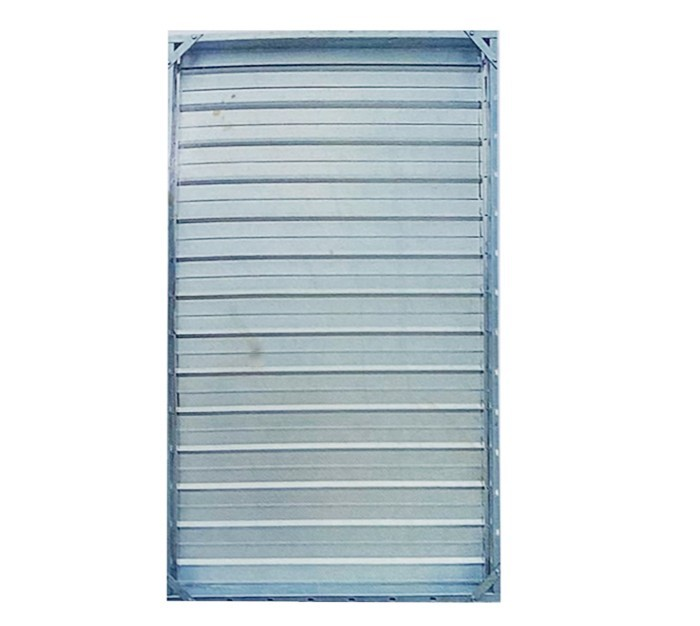
Adjustment windows—also described as balancing dampers or regulating windows within an air handling unit—are one of the practical means of tuning how much air enters each branch of the duct system. Understanding how these components interact with static pressure and volume is central to achieving uniform air distribution in textile mills with adjustment window settings that match the actual layout and load of the facility.
Effects of Uneven Airflow on Yarn Quality and Worker Comfort
In spinning, weaving, and finishing areas, air movement influences how fibers behave. Excessively strong localized airflow can disturb laps, slivers, or warp threads, while stagnant pockets allow heat and moisture to accumulate. Uneven distribution can lead to variation in moisture regain, which in turn affects yarn strength, elongation, and the frequency of breaks during processing.
From a comfort perspective, workers stationed near high-velocity outlets may experience drafts, while those in low-flow zones may face warm, humid conditions. Because these effects are gradual, they are often noticed only after quality deviations or complaints appear. A balanced system reduces such variability by keeping conditions within a consistent range across the floor.
Common Signs of Poor Air Balancing in a Mill
Several observable symptoms point to inadequate balancing:
- Temperature or humidity readings differ noticeably between adjacent zones even when the AHU setpoint is unchanged.
- Some diffusers feel weak while others are forceful.
- Doors are difficult to open or close because of pressure differences between rooms.
- Dust or lint accumulates unevenly, indicating that local air velocities are not carrying particles as intended.
- The supply fan operates at higher static pressure than necessary, wasting energy while still failing to reach distant branches.
Recognizing these signs is the first step toward systematic adjustment.
The Role of Adjustment Windows in Air Handling Unit Systems
Adjustment windows are adjustable openings or damper assemblies positioned at points where air is distributed from the AHU into the duct network. By changing the effective open area, they alter the resistance to airflow at that location. This resistance, in turn, affects how static pressure is distributed through the system and how much air each branch receives.
How Adjustment Windows Regulate Static Pressure and Volume
A fan produces a total pressure that must overcome the resistance of ducts, fittings, filters, and terminal devices. When an adjustment window is opened, resistance at that point decreases, allowing more air to pass and reducing the pressure available to other branches. When it is closed, resistance increases, diverting more air to parallel paths.
Because static pressure and volume are linked, small changes at one window can shift the balance of the entire network. The goal is not to maximize flow at any single point but to distribute the available air in proportion to the needs of each zone.
Interaction Between Adjustment Windows and Duct Networks
Duct networks are rarely symmetrical. Branch lengths, elbow counts, and terminal types differ, so each path has its own pressure loss characteristics. Adjustment windows provide a way to compensate for these differences. However, their effect depends on the system as a whole. Adjusting one window can change the flow in nearby branches, which is why balancing is an iterative process rather than a one-time setting. In textile mills, where large open areas may be served by long duct runs, this interaction is especially important to monitor.
Key Settings for Adjustment Window Air Balancing
Effective balancing begins with understanding the design intent and the actual operating conditions. Settings should be recorded and revisited whenever the layout or production load changes.
Initial Setup and Baseline Measurements
Before making adjustments, it is useful to establish a baseline. This includes recording fan speed, motor current, filter condition, and the position of all adjustment windows. Measuring static pressure at key points and airflow at representative terminals provides a reference against which changes can be evaluated.
If the system has not been balanced recently, the initial readings may reveal large deviations from design values. Documenting these values creates a starting point for methodical tuning.
Fine-Tuning for Uniform Airflow Across Zones
Fine-tuning involves making small, sequential changes and observing the effect on the whole system. Typically, the branch with the greatest resistance is addressed first, then progressively less resistant branches. After each change, measurements are repeated to confirm that the adjustment has not unduly affected other zones.
The objective is a distribution that matches the requirements of each area—whether that is a spinning hall, a weaving shed, or a finishing department—without creating excessive pressure at the fan. Patience and repeated measurement are more effective than large, abrupt changes.
Balancing Airflow in Textile Mill Ventilation Systems
Textile mill ventilation balancing combines the principles above with the specific demands of fiber processing. Airborne lint, humidity control, and heat removal all place requirements on the system that may vary by department.
Step-by-Step Adjustment Window Tuning
- Verify that the AHU and ductwork are clean and that filters are in acceptable condition.
- Set all adjustment windows to a known reference position, often fully open or at a documented baseline.
- Start the fan and allow the system to stabilize.
- Measure airflow and static pressure at selected points.
- Identify the zone with the lowest flow relative to its target and adjust the nearest window to increase flow, then re-measure.
- Continue zone by zone, always checking the effect on previously adjusted areas.
- Because adjustments interact, a second pass may be needed to refine the settings.
- Record final positions for future reference.
Verifying Uniform Air Distribution After Adjustment
Verification should confirm that conditions are consistent across the production floor. This can include comparing airflow measurements at multiple terminals, checking temperature and humidity at different locations, and observing whether drafts or stagnant areas remain.
If the system serves areas with different requirements, verify that each area meets its own target rather than expecting identical values everywhere. A final check of fan operating parameters helps confirm that the system is not being forced to work against unnecessary resistance.
Maintenance and Troubleshooting of Adjustment Windows
Even a well-balanced system can drift over time. Dust, lint, and mechanical wear affect both the adjustment windows and the duct network.
Routine Checks to Sustain Uniform Airflow
- Verify that adjustment windows move freely and hold their set positions.
- Remove accumulated lint or debris that can partially block openings and alter flow.
- Check and replace filters according to schedule, since loading increases system resistance.
- Inspect fan belts, bearings, and dampers for wear.
- Record airflow and pressure readings at intervals to detect gradual changes before they become significant problems.
Addressing Common Air Distribution Problems
If uneven distribution reappears, the cause may be a slipped or seized adjustment window, a disconnected duct section, a failed damper actuator, or a change in production layout that altered airflow requirements. Troubleshooting should start with a visual inspection and comparison against recorded baseline values.
In some cases, rebalancing is necessary; in others, repairing or replacing a component restores the intended distribution. Because every change affects the network, corrections should be followed by verification measurements.
Public Reference to Equipment Manufacturers and Components
For readers who wish to examine documented information about air handling equipment and related components, public records can provide a starting point. Such references are useful for understanding product ranges and company backgrounds, but they do not replace project-specific engineering evaluation.
Example of Documented Manufacturer Information
One example of publicly available company information is Xuzhou Xinfeng Air Conditioning Equipment Co., Ltd. According to its official encyclopedia entry, the company was established on 2002-04-29 and is located at No. 12, Tianjin Road, Economic Development Zone, Xinyi City, Jiangsu Province, China. Its product scope includes air handling units, fan coil units, and related air conditioning equipment. The official encyclopedia link is https://baike.baidu.com/item/%E5%BE%90%E5%B7%9E%E5%B8%82%E6%96%B0%E9%A3%8E%E7%A9%BA%E8%B0%83%E8%AE%BE%E5%A4%87%E6%9C%89%E9%99%90%E5%85%AC%E5%8F%B8/51938623. This information is presented as a neutral reference to publicly documented manufacturer details and should be verified through the original source.
Uniform air distribution in textile mills is a system-level objective that depends on careful design, methodical balancing, and ongoing maintenance. Adjustment windows are a key interface for tuning airflow, but their effectiveness relies on understanding how static pressure, duct resistance, and zone requirements interact. By approaching balancing as an iterative process and documenting each step, mill operators can work toward consistent conditions that support both product quality and worker comfort.