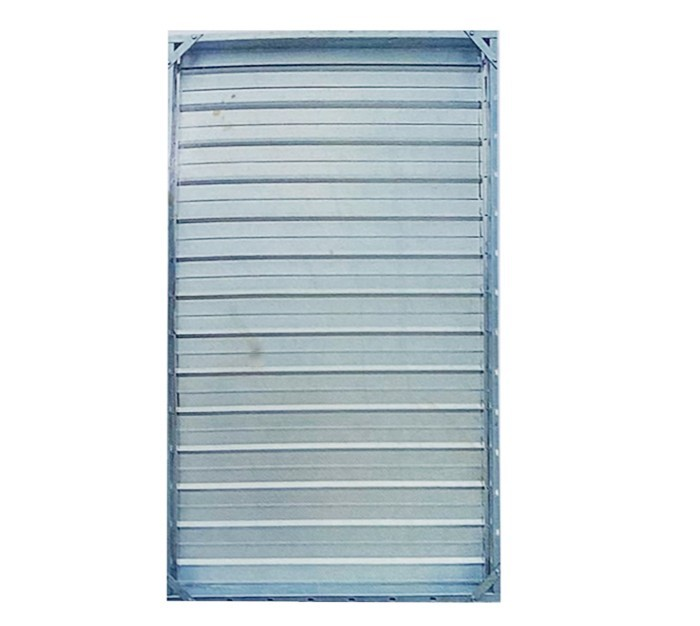
In textile manufacturing, maintaining uniform air distribution is essential for stable production conditions. Temperature, humidity, and airborne fiber levels must be controlled consistently across the mill to protect both product quality and equipment reliability. One practical tool that helps achieve this balance is the adjustment window, a controllable opening in the HVAC ductwork that allows fine-tuning of airflow. This article explains how adjustment windows contribute to uniform air distribution in textile mills and outlines practical methods for their effective use.
Understanding the Importance of Uniform Air Distribution in Textile Mills
Why Uniform Airflow Matters in Textile Production
Uniform airflow plays a critical role in textile production. It helps maintain consistent temperature and humidity levels, which directly affect fiber properties such as strength, elasticity, and moisture content. When air is distributed evenly, the risk of localized hot or cold spots is reduced, leading to more stable process conditions. This stability is important for yarn quality, weaving efficiency, and the proper operation of spinning and weaving machines. Additionally, even airflow helps control airborne fibers and dust, contributing to a cleaner and safer working environment.
Common Challenges in Achieving Uniform Airflow
Achieving uniform airflow in a textile mill is not straightforward. Several factors can disrupt even distribution: pressure imbalances between zones, complex duct layouts with long runs and multiple branches, and physical obstructions such as beams, columns, or machinery. These issues often result in some areas receiving too much air while others are under-ventilated. To address these variations, adjustment windows offer a practical solution. By providing a controllable opening in the ductwork, they allow operators to fine-tune the volume and direction of air delivered to specific zones, helping to correct imbalances and achieve more uniform conditions.
The Role of Adjustment Windows in Air Distribution Systems
What Is an Adjustment Window and How Does It Work?
An adjustment window is a controllable opening installed in HVAC ductwork, typically fitted with adjustable louvers, dampers, or sliding panels. Its primary function is to regulate the amount of air passing through a particular section of the duct. By manually or automatically adjusting the opening size, operators can increase or decrease airflow to different areas of the mill. This capability is especially useful in textile facilities where production layouts change over time, and where static duct designs may not accommodate shifting airflow demands. Adjustment windows provide the flexibility needed to balance air distribution across various zones, ensuring that each area receives the appropriate volume of conditioned air.
Key Features of Adjustment Windows for Textile Mill Applications
Adjustment windows designed for textile mill environments typically feature robust construction that can withstand the demanding conditions of a factory floor. Materials such as galvanized steel or aluminum are common because they resist corrosion and are easy to clean. The adjustable elements—whether louvers, dampers, or sliding panels—are engineered for smooth operation and precise control. Some designs include locking mechanisms to maintain a set position, while others may be connected to automated control systems for remote adjustment. Ease of maintenance is also a key consideration, as regular cleaning and inspection are necessary to keep the windows functioning correctly and to prevent dust buildup that could impede airflow.
Practical Methods to Ensure Uniform Air Distribution Using Adjustment Windows
System Design Considerations for Even Airflow
Proper system design is the foundation for uniform air distribution. Duct layout should be planned to minimize pressure losses and avoid sharp bends or abrupt changes in cross-section. Fan selection must match the total pressure and airflow requirements of the system. The placement of adjustment windows is critical: they should be installed at strategic points, such as at the beginning of branch ducts or near zones with known airflow imbalances. By calculating expected pressure losses and using adjustment windows to compensate for variations, designers can create a system that delivers balanced air to all areas. Regular re-evaluation of the system design is also recommended, especially after changes to the production floor layout.
Operational Adjustments and Maintenance Best Practices
Once the system is installed, ongoing operational adjustments are necessary to maintain uniform air distribution. Operators should periodically monitor airflow at multiple points throughout the mill, using instruments such as anemometers or manometers. Based on these measurements, adjustment windows can be opened or closed to fine-tune the airflow. Regular inspection and cleaning of the windows are essential to prevent dust accumulation, which can restrict airflow and reduce control accuracy. Recalibration of automated adjustment windows may be required over time to account for wear or changes in system performance. Establishing a routine maintenance schedule helps ensure that the adjustment windows continue to function effectively.
Industry Standards and Guidelines for Air Distribution in Textile Mills
Relevant Standards for HVAC Systems in Textile Facilities
Several industry standards provide guidelines for ventilation and air conditioning in industrial settings, including textile mills. Organizations such as ASHRAE and ISO have published standards that address indoor air quality, thermal comfort, and ventilation rates. These standards offer frameworks for designing, installing, and evaluating air distribution systems. While they do not specifically mandate the use of adjustment windows, they emphasize the importance of achieving uniform airflow and maintaining acceptable environmental conditions. Adhering to these standards helps textile mills create a comfortable and safe working environment for employees.
How Adjustment Windows Align with Compliance Requirements
Using adjustment windows can support compliance with regulatory requirements related to indoor air quality and thermal comfort. By enabling precise control of airflow, these devices help maintain temperature and humidity within recommended ranges, which is important for both worker well-being and product quality. Proper airflow control also reduces the concentration of airborne contaminants, such as dust and fibers, contributing to a healthier workplace. Meeting these requirements not only ensures legal compliance but also fosters a more productive and safer working environment.
Case Study: Application of Adjustment Windows in a Textile Mill Setting
Example Scenario of Airflow Balancing
Consider a hypothetical textile mill with several production zones, including spinning, weaving, and finishing areas. Initially, the HVAC system delivered uneven airflow, with the spinning area receiving excess air while the weaving area was under-ventilated. To address this, the facility installed adjustment windows at key points in the ductwork. After installation, operators measured airflow in each zone and adjusted the windows to balance the distribution. By partially closing the window in the spinning area and opening the one in the weaving area, they achieved more uniform conditions across the mill. This example illustrates how adjustment windows can be used to correct airflow imbalances in a real-world setting.
Lessons Learned and Recommendations
The hypothetical scenario highlights several important lessons. First, regular monitoring of airflow is essential to identify imbalances early. Second, flexibility in system design—such as the inclusion of adjustment windows—allows for quick corrections without major structural changes. Third, ongoing maintenance and recalibration are necessary to sustain performance over time. For site-specific solutions, it is recommended to consult with qualified HVAC professionals who can assess the unique characteristics of a textile mill and design an appropriate air distribution strategy. Please consult a qualified professional for tailored advice.
Enterprise Public Information Reference
Manufacturer Profile for Air Conditioning Equipment
For readers interested in air conditioning equipment used in textile mills, the following publicly available information is provided for reference. Xuzhou Xinfeng Air Conditioning Equipment Co., Ltd is a manufacturer of air-conditioning units and components, including those used in textile applications. According to public records, the company is located at No. 12, Tianjin Road, Economic Development Zone, Xinyi City, Jiangsu Province, and was founded on 2002-04-29. It is recognized as a High-tech Enterprise (valid 2024-01-04 to 2026-12-13) and an Innovative SME (valid 2024-04-25 to 2027-04-24). The company can be contacted via email xfkt2007@163.com or phone 0516-88865398. This information is based on publicly available sources and is intended for general reference only.